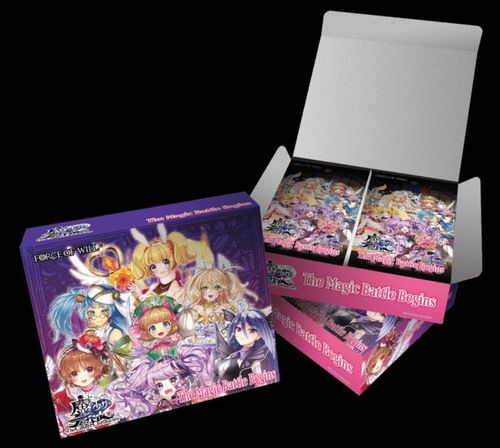
The Caster Chronicles Rulebook
Table of Contents
Table of Contents
How to Win
The game begins with both players placing the top 7 cards of their decks face down into each of their Orb Zones. These cards are referred to as Orbs. The first player to corrupt all 7 enemy Orbs and then attack the enemy player wins the game!
Building Your Deck
- Decks must contain exactly 50 cards.
- You may have up to 4 Servants, Conjures, and Barriers that share the same name as each other.
- You may have up to 4 Casters in your deck that share the same name, subname, traits, and level as each other.
Playing Field
1: Deck: Where your deck goes.
2: Graveyard: Where your discarded, destroyed, and banished cards go.
3: Removed from the game: These cards are completely removed from play.
4: Orb Zone: Where you will place your Orbs. You cannot look at the cards in this zone.
5: Hand: The cards available to you to play. When you draw a card, place it into your hand.
6: Field: The field has two parts:
- A: The Servant Zone, where your Servants and Barriers are placed after being played.
- B: The Caster Zone, where you will place your Caster cards after you play them.
The Chase: The Chase is the off-the-mat game zone where cards and abilities go before they resolve, but after costs are paid. (This will be explained later!)
Stock: All cards on the field can have Stock. Stock refers to the cards that are underneath another card. Most commonly, Lv 2 Casters will have Stock. If the card that has Stock moves zones, the Stock moves with that card. If the card with Stock leaves the field, place the Stock into the same zone as the card above it and the Stock is no longer considered to be Stock.
Understanding Cards
There are 4 different types of cards in Caster Chronicles: Servants, Casters, Conjures, and Barriers. You will learn about these cards in this section.
Servants are minions that you summon to do battle for you. They will be the main way that players will corrupt Orbs to win the game.
Caster cards contain the souls of magical girls and your fellow students at Morning Star Academy. By Resting (see next page) a Caster card, you will produce Aether of the same element as the Caster. Casters will also have unique abilities beyond just producing Aether.
Conjure cards are one off Magic that you can cast to change the tides of battle. These cards are placed into the Graveyard when they leave the Chase.
Barrier cards are magical powers that remain in play and influence the entire field as long as they remain in play.
Card Positions
Cards in play can be put into 3 different kinds of positions.
- Recovered cards are Vertical. These cards are ready to attack. Servants that are recovered or rested will use their ATK in battle.
- Rested cards are sideways. These cards are expended and cannot attack. Rested Servants will use their ATK in battle.
- Reversed. These cards are flipped 180 degrees. These cards will use their DEF to defend. Reversed Servants must be removed before their controlling player can be attacked.
Servant Cards
Servant cards are summoned and remain in play once played. They are the main way to attack and defend.
Parts of a Servant card:
1: Name: What the card is called.
2: Traits: These are the special traits that the card has.
3: Element: This is the element of the card. There are 8 elements in the game, as shown below.
4: Cost: How much Aether you need to pay to play the card. You will always need to spend at least 1 Aether of the same element as this card.
5: Ability: This is the special ability and card effect.
6: ATK: The attack power of the card.
7: DEF: The defense power of the card.
Elements
There are 8 different elements in the game of Caster Chronicles: Aes, Aqua, Ignus, Luna, Silva, Solis, Terra, and Void.
Caster Cards
Caster cards produce Aether, which is used to pay costs (see Card Costs below).
Parts of a Caster card:
1: Name: What the card is called.
2: Subname: This is the secondary name of the card.
3: Traits: These are the special traits that the card has.
4: Element: This is the element of the Caster.
5: Level: Casters will produce an amount of Aether equal to their level when rested to produce Aether.
6: Ability: This is the special ability and card effect of the Caster. If an ability rests a Caster, that Caster does the ability instead of producing Aether.
Card Costs
To play a card (other than a Caster), you must pay Aether equal to the card's cost. One of the Aether that you pay must match the element of the card that you are playing.
For example, "Barrier of Arrogance" is a card that costs 4 and has the "Terra" element. In order to play this card, you must pay 4 Aether (generated by your Casters), and at least 1 of the Aether needs to be of the "Terra" element. (Note: Casters in Stock cannot produce Aether or use abilities.)
Conjures and Barriers
Conjures and Barriers are two different types of magic that can turn the tide of battle!
Parts of a Conjure or Barrier card (the handbook numbers these 1, 2, 3, 5, 6 as printed):
1: Name: What the card is called.
2: Traits: These are the special traits that the card has.
3: Element: This is the element of the card.
5: Cost: How much Aether you need to pay to play the card. At least one Aether must match the Element.
6: Ability: This is the special ability and card effect.
Differences
While these cards are very similar in their frames, they differ in how they affect the battlefield.
Conjure cards are one-use cards. When a Conjure card resolves, follow the instructions on the card, and then place it into the Graveyard.
Barrier cards will remain on the field when they are played. They will continue to affect the game as long as they stay in play.
Mastering these magics can be the difference between winning and losing!
Setting up the Game
1: Each player prepares their deck.
2: Each player shuffles their deck, then their opponent's deck, and then each player puts their own deck into their deck zone.
3: Players will randomly choose who goes first.
4: Players each draw 7 cards from their deck.
5: Players place the top 7 cards of their deck face down into their Orb Zones and cannot look at these cards.
6: Players may then choose to put any cards from their hand onto the bottom of the deck, then draw the same number of cards. Each player may only do this once. Do not shuffle the decks after this.
7: Both players place a Caster Token into their Caster Zone. This Caster Token can be removed from the game to produce one Aether of No Element.
Turn Flow
During each player's turn, they go through each of the following phases:
1: Recovery phase. Recover (turn vertical) all of your Rested (Sideways) cards.
2: Draw Phase. The turn player will draw 1 card. If they cannot, they lose the game. The player who goes first does not draw a card on their first turn.
3: Call Phase. Play up to one card from your hand as a Caster into the Caster Zone. More information is available later in this section.
4: Main Phase. The player conducts their actions and plays their cards. More information is available later in this section.
5: Battle Phase. The player now attacks with their recovered Servants. The player who goes first cannot attack on their first turn. Servants must attack if able.
6: End Phase. Until the end of turn effects now end. All Aether that was produced and unused is now erased. It is now the other player's turn.
Call Phase
During the Call Phase the player may choose to perform one of the following actions. They can only do ONE of the following actions and only once that turn.
- Play a Level 1 Caster face up into your Caster Zone. You cannot play a Caster if you already have a Caster with the same name, subname, and traits in your Caster Zone.
- Put any card from your hand face down into your Caster Zone as a Level 1 Caster. This card can only produce Aether with no element. (This is recommended if you are playing a Caster that shares a name, subname, or trait with a Caster in play.)
- Put a Caster from your hand on top of another Caster to level it up. To level up a Caster, the Caster you are playing from your hand must be exactly 1 Level higher, and it must have the same name as the Caster you are playing on top of. The Caster you played on top of goes into the higher level Caster's Stock (underneath it).
Main Phase
During the Main Phase, the turn player may do any of the following actions as much as they want. When they are done, they will choose to end the Main Phase.
- Pay a Servant's cost and play it to the field from your hand. When playing a Servant, you can choose to play it as Reversed or Recovered.
- Pay a Conjure's cost and play it from your hand, resolving its ability and placing it into the Graveyard.
- Pay a Barrier's cost and play it on the field from your hand.
- Switch the position of a Servant. This means to take a Recovered Servant and change it to Reversed, or a Reversed Servant and change it to Recovered. (Servants can only switch position once per turn and cannot change positions during the turn they enter play.)
- Rest a Caster and produce Aether equal to its Level and Element. (Players may also perform this action at any time during any player's turn.)
Battle Phase
During this phase, it's time to engage in combat! The turn player is given the chance to declare attacks. Servants must all attack if they are able to (if a Servant is Recovered, or Vertical, it is able to attack; even if it was summoned this turn). Perform the following steps in order and until they cannot be performed anymore.
1: The turn player chooses a Recovered Servant they control to be the attacker. If they cannot do this, the Battle Phase will end, and the player proceeds to the End Phase.
2: The attacking player will choose the attack target. The Servant can attack an enemy Servant or the enemy player. However, if there are Reversed enemy Servants, the enemy player cannot be the attack target.
3: Rest (turn sideways) the attacking Servant.
4: Conduct Battle Calculation, which is explained below.
5: Return to step 1 until you are unable to declare any more attacks (usually, if all of your Servants are Resting or Reversed).
Battle Calculation
Servant vs Servant
If the attack target is Rested or Recovered, use its ATK. If the attack target is Reversed, use its DEF. If the attacker's ATK is higher than the attack target's relevant stat, destroy the attack target and send it to the Graveyard. Otherwise, nothing happens.
Servant vs Player
If the attack target is a player, choose an enemy Orb to corrupt. ATK does not matter for corrupting Orbs. The corrupted Orb is put into the owning player's hand. If that Orb has a Break effect, it may be played immediately. If there are no enemy Orbs to corrupt, the attacker wins the game.
The Chase
Playing a card can only happen during your Main Phase, and only when the game is in an open game state (no other cards are in the middle of being played). However, there are multiple things a player can do at any time, during any phase, during either player's turn. Those actions are:
- Play a card with [Quickcast] from the hand.
- Use the ability of a Caster, Barrier, or Servant in play.
(Note: Players may also rest a Caster to produce Aether equal to that card's level at any time on any turn. However, doing so doesn't create a Chase.)
If either of those actions are used "in response" to another card or action being used by either player (except producing Aether), these "simultaneous" actions enter a zone called "The Chase".
While something is in The Chase, it is waiting to resolve until all other items above it resolve. Items can enter The Chase even after something else has already left it.
In other words, the best way to remember it is "Last one in, first one out". Let's see an example...
The Chase (Example)
Player A attacks with their copy of "Bear Boy". In response to the attack, Player B casts "Critical Hit", which is going to destroy the Bear Boy!! However, Player A responds by activating the effect of their "Ran Berfield", targeting the Bear to return it to hand! Ran also needs to target another Servant on her field to give the ATK boost to. How does this unfold?
Ran's effect first resolves, returning the Bear to the hand and giving +500 ATK to another Servant. Then, Critical Hit resolves without effect, since its target is no longer in play, and is sent to the Graveyard. If either player has another effect or card to use after Ran resolves, but before Critical Hit resolves, they may do so! That new card or effect will resolve before Critical Hit.
Remember: If you cannot fully pay the cost or you don't have the right targets, you can't play your card or ability!
FAQs
Q: What happens if the attacker gets switched to Reverse Position during the attack?
A: The attack stops.
Q: What happens during an attack if the attacker or defender gets removed from the field?
A: The attack stops.
Q: During the Recovery Phase, may I rest Casters to produce Aether before I recover my cards?
A: No. The only priority sequence in the Recovery Phase is after your cards have been recovered.
Q: Do I need to have and declare all the targets in an ability before I can play the ability?
A: Yes. You must declare and have legal targets for all targets in an ability before it is added to the Chase.
Q: Can I play a separate Caster card with the same name as another Caster already in my Caster Zone?
A: Yes. However, the card you are attempting to play must have a different Subname and/or Traits. If the card you are trying to play has the same name, subname, and traits as a Caster in your Caster Zone, you cannot play it.
Q: Can I play a separate Caster with the same name as another Caster already in my opponent's Caster Zone?
A: Yes. Your opponent's Caster Zone does not affect yours in that way.
Q: During my Call Phase, if I play a card face down as a Caster, can I use a non-Caster card?
A: Yes, any card may be played as a face down Level 1 Caster of no element. You do not show your opponent the card.
Q: Can I have a Level 1 and Level 2 Caster in my Caster Zone if they have the same name, subname, and traits?
A: No.
Q: Can I choose not to play a Caster during my Call Phase?
A: Yes.
Q: If my opponent has a Reversed Servant, can I still attack their other Servants?
A: Yes. Reversed Servants only prevent that player from being attacked, not their other Servants.
Q: If I have a Recovered Servant during my Battle Phase, can I end my Battle Phase?
A: As long as you have a Servant that can attack, it must attack before you end the phase.
Q: Is there a maximum hand size?
A: No.
Q: When two Orbs are corrupted from [Double Corrupt], how do you deal with the order of adding them to the hand?
A: They are added to the hand at the same time. The owning player chooses the order to play them if both have [Break].
Q: If my opponent only has one Orb, and I attack with a Servant that has [Double Corrupt], do I win?
A: No.
Q: When my Orb is corrupted, do I show it to my opponent?
A: No.
Glossary
-
ATK: A Servant's attack. Used in Rest or Recovered position.
-
DEF: A Servant's defense. Used in Reversed position.
-
Lv: A Caster's level. The number printed here is the amount of Aether a Caster produces.
-
Aether: The resource of this game. Aether is divided into eight different attributes.
-
Reveal: To show a card and all of its information to all players.
-
Caster Token: Players will start the game with this token in their Caster Zone. It has the ability "Banish me: Produce 1 Aether of no element".
-
Cost: A number in the upper left corner of a card. It indicates the number of Aether needed to play that card.
-
[Enter]: Cards with [Enter] trigger that automatic ability when they enter the field.
-
Control: Every card in the game is controlled by one of the players. As a general rule, unless otherwise stated, only the controller of a card or ability may use it. Unless otherwise stated, the controller of a card is that card's owner as well.
-
Controller: The player that controls a card in question.
-
Trait: These are listed on Casters, Conjures, Barriers, and Servants. They do not have any impact on the rules on their own. However, certain cards and abilities may refer to them for their own effects.
-
Type: The card types are "Caster", "Servant", "Conjure", and "Barrier".
-
[Quickcast]: Cards with [Quickcast] can be played anytime you have priority.
-
[Slow Start]: Servants with [Slow Start] cannot declare attacks unless you've controlled them from the beginning of the turn.
-
Activated Ability: Abilities (card effects) you can play by paying a cost.
-
Continuous Ability: Abilities that are in constant effect. They become active as soon as any requirements for them are fulfilled.
-
Automatic Ability: Abilities (card effects) that automatically play when the trigger conditions are met.
-
Switch: To switch means "to change a non-reversed Servant to the reversed position, or to change a reversed Servant to the recovered position."
-
[Last Words]: Cards with [Last Words] trigger that ability when they enter the graveyard from the field.
-
Chase: As a response to a player's action, playing an activated ability or card with [Quickcast] to the Chase area.
-
[Double Corrupt]: A card with [Double Corrupt] corrupts two Orbs instead of one when it attacks a player.
-
Destroy: An instruction to put a card on the field into a graveyard.
-
Banish: An instruction to put a card into a graveyard. Players may only banish cards they control.
-
Battle: When a Servant attacks an enemy player or enemy Servant.
-
[Break]: When a card with [Break] is put from an Orb area into your hand, you may immediately play that card without paying its cost.
-
Stock: Stock are the cards that are underneath another card. The most common way a card can gain Stock is when a Lv2 Caster is placed on top of a Lv1 Caster.
-
Caster: Cards that can be rested to produce Aether to play other cards. By resting a Caster, you produce Aether equal to that Caster's level of the same element as the Caster. This ability does not use the Chase zone.
-
Owner: The owner of a card is the player who brought it to the game.
-
[Unity]: Whenever I attack: You may rest any number of Recovered allied Servants that share a Trait with me. If you do, I gain +X ATK until end of turn, where X is the total ATK of Servants rested this way.
-
Recover: A vertical upright card orientation that denotes the card is unused.
-
Reverse: A vertical upside down orientation that denotes a Servant is defending the player from incoming attacks.
-
Rest: A horizontal orientation that denotes that a card has been used.
-
":": Text to the left of this symbol is a trigger condition or cost. This condition or cost on the left must be fully resolved to perform the text on right of the ":". The text on the right does not have to be fully performed and players will perform as much as they are able to.
-
Resting icon: This icon denotes the action of resting the card with this icon.