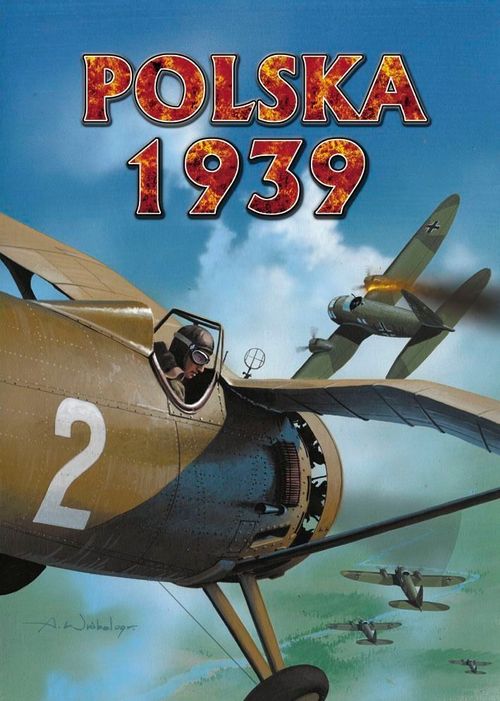
Polska 1939
Polska 1939 Rulebook
Table of Contents
Table of Contents
1.0 Introduction
„Poland 1939” simulates the invasion of Poland in September 1939. Four differently colored sets of counters (hereafter called “units”) are provided with the game. The units represent forces that participated in the battle. They were troops of Poland, Germany, USSR and Slovakia. For hypothetical scenarios small sets of Romanian, Hungarian and Lithuanian units are also available.
Map covers all Poland territory (excluding small Western Wielkopolska cap) and frontiers of its neighbors. Land terrain is divided into areas. Areas are grouped into regions. Map includes also fortresses, fortified zones and lines.
1.1 Definitions
Area – base terrain ‘unit’ demarked by red or blue dashed lines, river, sea or country border. An area can be occupied by units of only one of the war parties.
Region – A group of several areas demarked by blue dashed line, river, sea or country border.
MP (PR) – Movement Points that define unit’s ability to move.
SP (PS) – Strength Points that define unit’s ability to fight.
Unit Back – shows unit’s alignment and allows hiding unit’s details from opponents.
Unit Front – shows unit’s details: size, type and unit number.
Initiative – used to differentiate players. Player with initiative usually acts first.
1.2 Combat offensive/defensive modifier
It’s a row shift applied on tables where combat results and losses are looked up. Modifiers in favor of defender has a ‘-‘ sign and in favor of attacker a ‘+’ sign.
Example:
a) +2 means attacker gains 2 offensive modifiers that favors him and hinder defender.
b) If attacker has 30 SPs, defender 8 SPs and attack was made through fortified line (-3 defensive modifier) then combat result from COMBAT RESULT table is looked up by moving 3 row down from ’19-22’. Final Column is ‘10-12’. Attacker losses are looked up 3 rows up from original ‘5-8’ (final row is 17-20) and defender’s losses 3 rows down from original ’29-32’ (final row is 17-20 as well) in COMBAT LOSSES table.
1.3 Nationalities
Poland, Germany, USSR, Slovakia, Lithuania, Hungary, Romania.
1.4 Rounding
Any rounding to integer numbers is rounded up.
Example: Unit with 5 SPs attacking from swamps has its strength halved. It will attack with 3 SPs.
2.0 Units Types
Unit represented by one counter is usually brigade or division. There are also independent fortification units and frontier regiments. Exceptionally division can be split into regiments if it was spread along large areas (e.g. Polish 9th INF).
Unit’s counter provides info on unit type, size, number (or code) as well as commander name.
Example: Above picture shows 8th (unit number) infantry (unit type) division (unit size) under command of col. Furgalski (Commander Name). This unit will be described as 8 INF in the setup.
Example: Above picture shows “Wielkopolska” cavalry (unit type) brigade (unit size) under command of col. Abraham (Commander Name). It unit will be described as “Wielkopolska” CAV [Wk] in the setup.
Example: Above picture shows 3rd (unit number) FD (unit code) regiment (unit size). It will be described as 3 FD [3 KOP] in the setup.
Unit size
| Size | Division (-D) | Regiment (-R) | Brigade (-BR) | Battalion (-B) |
|---|---|---|---|---|
| Symbol | XX | III | X | II |
Units types
-
Motorized units
- armored (ARM)
- motorized (MOT)
- light divisions (LARM)*
- headquarters (HQ)
*Light divisions were special kind of German armored divisions (experimental ones – were used in Poland only). They are mentioned separately to show difference as there are e.g. both 1st armored division and 1st light division.
-
Non-motorized units
- infantry (INF)
- cavalry (CAV)
- mountain (MINF)
- national defense (ND) – They were Polish units created for defense of home city. Some units’ counters have ‘ON’ (Obrona Narodowa – National Defense) on their counter but many just have the name of the city they originated from (e.g. “Grodno”, “Modlin”, “Poznań”).
- frontier defense (FD) – They were Polish units that were created from customs service officers and employees for direct border defense. Their counters are usually marked with ‘KOP’ (Korpus Ochrony Pogranicza – Frontier Defense Corps)
-
Air units
- bombers (BOM)
- offensive air support (OFF)
Note: In setup obvious cases, for clarity, unit size is omitted for unit naming. E.g. INF for infantry division (not INF-D) or CAV for cavalry brigade (not CAV-BR).
3.0 Turns and Phases
3.1 General Rules
3.1.1 A turn is equivalent of one day.
3.1.2 Every turn (day) is divided into 6 phases:
Side with initiative is called Player A. Side without initiative is called Player B.
Phase I – Player A’s air missions (see 6.1.2 and 6.2.3)
a) Player B secretly notes which areas will be defended by his bomber units. b) Player A places his bomber units to carry out air missions. c) Player B reveals placement of his bomber units – if an enemy bomber unit has any friendly bomber(s) within 2 areas’ radius, both units are returned to their bases (one B’s bomber negates one A’s bomber). In case there are multiple bombers intercepted, player A chooses which units are to return). d) Any Player A’s bombers left can carry on with their missions.
Phase II – Player A’s attack
Player A can attack any adjacent areas occupied by enemy units (see 5.0).
Phase III – Player A’s movement
Player A’s units, that did not fight in the previous phase, can move (see 4.0).
Phase IV – Player B’s bombing missions
See Phase I.
Phase V – Player B’s attack
See Phase II.
Phase VI – Player B’s movement
See Phase III.
Note: Alliances perform in the same phases. For example in the historical scenario, German and Soviet units perform bombing missions in phase I.
4.0 Movement
4.1 General Rules
4.1.1 Movement of units is performed through areas borders and/or area node.
4.1.2 Every unit can move between adjacent areas using its MP limit. MP limits are:
- INF => 1 MPs
- CAV => 2 MPs
- ARM/MOT => 3 MPs
- HQ => 6 MPs
4.1.3 Regions free of enemy units can be traversed faster. If all unit(s) movement is performed only in areas of such a region(s) then:
-
all non-motorized units can use 2 MPs.
-
all units ignore terrain costs (each area cost 1 MPs).
Exception: Moving in an area with swamps or through area border with swamps always cost unit’s all MPs (see 4.2.4).
4.1.4 Area borders do not limit movement.
4.1.5 Moving through area node is restricted by presence of enemy unit(s) in adjacent areas. If any adjacent area of a node is occupied by enemy unit(s), movement through that node is prohibited.
Exception: Movement through a node is always allowed if the node is the only way a unit can move or retreat.
4.1.6 Moving through a node is prohibited if a river flows through it.
Exception: A unit can retreat through such a node, with an additional loose of 1 SP, if it is the only way the unit can retreat.
4.1.7 Movement through nodes is never blocked by adjacent fortresses or fortified areas.
4.1.8 Crossing enemy border and entering region containing enemy units cost an additional +1 MP.
4.1.9 Fortresses and fortified areas are independent regions.
4.1.10 Entering a fortress or fortified area does not cost any additional MPs.
4.1.11 Any number of units can enter an area (there is no stack limit for area).
4.2 Terrain Effect
4.2.1 Cost for entering adjacent areas is described in TERRAIN INFLUENCE table (TI).
Example:
- Entering an area containing clear terrain cost 1 MP.
- MOT and ARM units entering an area containing a forest must pay an additional +0.5 MP.
- A unit crossing a river to enter an area must pay an additional +1 PM (exception: important river, e.g. Vistula River +2 MPs).
4.2.2 Terrain costs are cumulated.
Example: MOT unit’s cost for entering a forest area through river is 2.5MP.
4.2.3 A unit can always move into an adjacent area if it’s its only movement (regardless of movement cost).
4.2.4 MOT and ARM units cannot move through swamped area borders. They can move into a swamped area.
4.2.5 MOT and ARM units cannot move through mountain area borders unless there is passage (valley) or a road marked on a map.
4.2.6 HQ units ignore terrain movement costs (they pay 1MP for every area). They must obey all motorized units terrain movement limitation (e.g. 4.2.6).
Mountain passage
5.0 Combat
5.1 Combat Procedure
5.1.1 Combat procedure is as follows:
a) Each player selects and adds SPs of all the units he wishes or must engage in a combat. b) Defender’s strength is subtracted from attacker’s. This gives row in the COMBAT RESULT table where combat outcome will be looked up. c) Row found in b) is modified according to any offensive/defensive modifier (see 5.2). d) Attacker rolls two dices. Intersection of row found in c) and column provided by dice roll gives combat result. e) Combat result is applied. f) Each player rolls two dices to determine combat losses incurred by the enemy (see 5.4).
Example: German 11 INF, 61 INF and “Kepmf” ARM are attacking Polish 20 INF in Mlawa. Their total strength is 42 but only 32 can be used in the combat (as attack is carried out from one area only). Defender’s strength is 15 SP. The difference is therefore 17. The polish division defends in fortifications and forest (giving it a total -4 defensive modifier). Taking that into account, the row where attack result will be looked up moves from ’16-18’ to ‘4-6’. If the German Player rolls a 6, combat result will be D1 and the Polish Player must retreat one area or lose 1 SP. Decision on what to do must be taken before combat losses are rolled. Next, both players roll for combat losses. The German player rolls a 7 which means that the Polish unit loses 1 SP – if roll was an 8 or higher, no losses would be incurred (as Polish losses are checked in row ’13-16’). The Polish Player checks German losses in ’29-32’ row (results 11 or lower means 1 SP loss for German units).
5.2 General Rules
5.2.1 Combat result is checked up in the COMBAT RESULT table.
5.2.2 Attack is voluntary.
5.2.3 Attack can be carried out on any number of chosen adjacent area(s) and presence of enemy on non-engaged adjacent areas has no effect.
5.2.4 Either the attacker or the defender must fight from one lone area during a single combat. Single combat (attack) must be split when both Players have units on multiple areas.
5.2.5 No more than 32 SPs can attack through area border; no more than 32 SPs can from attack through one area border. If unit’s strength is modified somehow (e.g. halved when attacking from swamps), it should be applied after this 32 SPs limit is reached.
5.2.6 Attack cannot be made through nodes.
5.2.7 A unit can only make one attack per turn and can only defend once per turn.
5.2.8 Combat can be supported by friendly HQ (attack and defense) and offensive air support units (attack only). Such support may add up to maximum SPs limit described in 5.25.
Example: a) Total 42 SPs of units are on an area. With support of 3 SPs from their HQ (in the same area) and 3 SPs from offensive air support, the maximum attack from this area is 38 SPs. b) If attack is carried out from 2 areas maximum strength of defending units is 64 SPs (since attack is carried out through 2 area borders).
5.2.9 Units attacking from or through swamps halve their SPs.
5.2.10 For clarity attacking units can be marked with “ATTACK” counter.
5.3 Retreat
5.3.1 All Dx results indicate defender’s retreat. ‘x’ indicates the number of areas the defender units should retreat. Retreat is allowed onto any area free of enemy unit.
5.3.2 If unit A retreats in an area where other friendly unit is stacked and this unit is attacked during the same phase, then unit A does not count for this combat, but count for combat result (retreat and losses).
5.3.3 If units defended in fortification with modifier 2 or higher, they may choose not to retreat.
5.3.4 If defending units choose not to retreat (see 5.3.3), each counter on area must carry additional losses equal to the number of areas they should have retreated.
5.3.5 If defending units must retreat (5.3.3 not satisfied) but this is not possible (no area to retreat, impassable terrain, out of fuel) all their combat losses are doubled.
Example: Combat result is D1(-1), combat losses 1 SP for two divisions (counters) on area. If they defended in a fortified area, even if completely surrounded (no area to retreat to) they can stay in place and lose 4 SPs in this case. If the unit defended in an area with no fortification (hence must retreat), for the same result, it will lose 8 SPs.
5.3.6 Retreat through node implies the loss of an additional 1 SP for all units retreating.
5.3.7 Retreat through rivers implies loss of an additional 1 SP (through important rivers an additional 2 SPs) for all units retreating.
5.3.8 If a unit is attacked by at least one enemy ARM unit and combat result obliges it to retreat, then, if the player decides not to retreat (if allowed by 5.3.3), he must take an additional 1 SP loss for each 12 SP of ARM units attacking.
5.3.9 ARM units, attacking through fortifications with modifier 3 or higher, do not count for rule 5.38.
5.3.10 If defending units retreated or were destroyed, attacking units can enter the vacated area.
Example: a) Defending units are forced to retreat through a node with a river flowing through it. Combat result was D1 and combat losses 1 SP. Total losses are 3 SPs in this case (1 SP from combat loss, 1 SP for retreating through a node and 1 SP for retreating through a river). b) Units defending in level 2 fortifications received combat result D1 and 1 SP loss. They were attacked by 27 SPs of ARM units. If the defending Player wanted to keep position, total losses would be 3 SPs (1 SP if he chose to retreat).
5.4 Combat Losses
5.4.1 Combat losses are provided in the COMBAT LOSSES table.
5.4.2 Combat losses procedure:
a) In the COMBAT LOSSES table, player finds row relevant to strength (real one used in combat, see 5.2.5) of his units taking part in the combat. b) Row from a) is modified by any relevant offensive/defensive modifier. c) Two dice are rolled. d) Intersection of row found in b) and column resulted of dice roll sets combat losses of opponent unit(s).
5.4.3 Terrain modifications influence both defenders and attacker losses.
Example: The German Player attacks the Polish 7 INF (with 10 SPs) in level 1 fortifications in forest (-2 defensive modifier). Strength of attacking German units is 35 SPs. The Polish Player checks losses of German units in row ’17-20’ (two rows above original ‘9-12’), the German Player check Polish losses in row ’25-28’ (two rows below original ’33-36’). Defender’s terrain and fortifications makes Polish losses smaller and German higher.
5.5 Reorganization
5.5.1 Some attacks require units (even when victorious) to reorganize.
5.5.2 Disorganized units are covered with “R” marker (need for reorganization).
5.5.3 Disorganized units have their attack strength halved.
5.5.4 Disorganized units fight full strength in defense.
5.5.5 Disorganized units that did not fight and had not moved through whole day (turn) (considered as full phase cycle) can remove their “R” marker.
Example: The German 18 INF was disorganized during an attack (phase II). If this unit does not move and is not attacked during subsequent phases III-II, it can remove its ‘R’ maker at the beginning of phase III next day. If the unit is attacked by a Polish bomber units (in phase IV) or by land units (in phase V) – even unsuccessfully, then it can regain organized status (if not attacked or moved later) next day at the beginning of phase V or VI respectively.
6.0 Air Forces
The number, strength and type of air units available for a Player are described in each scenario.
6.1 Bombers
6.1.1 Only one bomber unit can operate in one area.
6.1.2 Bombers’ missions are: bombard enemy units or rail transports attack.
6.1.3 A bomber unit can carry only one mission per day (turn).
6.1.4 Enemy units bombardment:
For each bombardment attempt one die is rolled:
- 1, 2 – no loss for enemy unit.
- 3, 4 – enemy unit loses 1 SP.
- 5, 6 – enemy unit loses 2 SPs.
Defending player chooses which one of his units takes losses. The die roll is modified by terrain in the area:
| Terrain | Modifier |
|---|---|
| Forest | -1 |
| Field Fortification | -1 |
| Fortress | -3 |
6.1.5 Half-strength (1 SP) Bombers inflicts only of 1 SP loss when modified die roll is 5.
6.1.6 Rail transports attack (see 8.0): In order to attack enemy units transported by train in a region, a Player writes (secretly) region and number of bomber units assigned to rail transport attack. Any rail transport that appears in the region can immediately be bombarded (see day 2 and 3 in 8.1.2). Attack is carried out according to 6.1.4 (see 6.1.8).
6.1.7 A train can be bombed only once in a given region during one turn.
6.1.8 Terrain modifiers does not count in rail transport attack.
6.1.9 All bombers’ missions can be carried out within 9 area radius from friendly country or 6 area radius from friendly supplied HQ.
6.2 Offensive Air Support
6.2.1 Only one air support unit can operate in one area.
6.2.2 Air support units can carry the following missions: enemy unit(s) bombardment or offensive air support.
6.2.3 Bombardment missions are analogous to 6.1.4 except dice roll results:
- 1, 2, 3 – no loss
- 4, 5, 6 – loss of 1 SP
6.2.4 Offensive air support missions can aid attacks only. Strength of the air support unit is added to the strength of attacking units (see 5.2.8).
6.2.5 Air support missions can be carried out within 4 area radius from friendly country or 3 area radius from friendly supplied HQ.
6.2.6 Attack on an area with units bombed successfully (6.1.4 and 6.2.2) in previous phase gains +1 offensive modifier.
7.0 Fortifications
There are 2 types of fortifications in the game:
- fixed fortifications (fortified lines and fortresses – drawn on a map)
- field fortifications (build by land units)
7.1 Fixed Fortifications
7.1.1 Units defending in fortified lines (FL) gain a -3 defensive modifier. FL modifier counts only for attacks through the FL.
7.1.2 If attack is made through several areas’ borders, FL modifier is used if total strength of units attacking through FL is greater than those attacking through borders without FL.
7.1.3 Units being in FL and not attacked through a border with FL are treated as in field fortifications ‘2’ (see 7.2).
Example: If strength of units 1 and 2 is greater than unit 3 then defender receives only -2 defensive modifiers. If unit 3 was stronger than 1 and 2 together, then defender receives -3 defensive modifiers.
7.1.4 Fortresses provide the following defensive modifiers:
- -4 if total strength of defending units is greater than 12 SPs,
- -3 if total strength of defending units is 5-11 SPs,
- -2 if total strength of defending units is 4 or less SPs.
7.1.5 Fortresses are supply bases for themselves (cannot supply any other area).
7.1.6 Fortresses are treated as independent regions.
7.2 Field Fortifications
7.2.1 Every unit (except HQs) that did not attack and did not move can build fields fortifications (FF). Appropriate counter is placed on an area at the end of friendly movement phase (phases III and VI).
7.2.2 FF has two levels. Each level is build according to (7.2.1).
7.2.3 FF provides defensive modifier according to their level.
Example: A unit did not attack or move. At the end of the movement phase, the Player can put field fortification level 1 in the area. If this unit (or any other unit that starts on this area) did not attack or move during next day (turn), fortification level 2 can be placed instead. Units on them gain a -2 defensive modifier.
7.2.4 FF is removed from the map if no unit is in the area at the end of the player’s movement phase.
Example: The 10th ARM was regaining supply in FF. On September 10th it moved to the frontline. At the end of the movement phase field fortifications are removed. If another unit (e.g. GrentzShutz Brigade) moved into the area, fortifications would have remained on the map.
7.2.5 FF is removed from the map if attacked area was emptied after combat.
8.0 Rail
Land units can be transported by train. Number of transport trains is described in each scenario. Sometimes reinforcements appear on the map already loaded on train– this is marked by (K) in the setup. Units transported by train are covered with “Rail Transport” counter.
8.1 Rail Transport
8.1.1 One train can transport one unit.
8.1.2 To transport a unit by train, the following steps needs to be executed:
Day (Turn) 1: Unit in an area containing a city loads onto train. It is covered with a “rail transport” counter. Player should write (secretly) the destination city of the train (cannot be changed later).
Day (Turn) 2: Unit is transported. Transport occurs on the shortest route to unit’s destination. Shortest route means that number of regions between departure city and destination should be minimal. If unit survives the transport, it is placed in its destination city area.
Day (Turn) 3: “rail transport” counter is removed and unit can move normally.
Example:
a) The Polish 2 INF starts the game (on September 1st) already loaded in rail transports. The Polish player can move the unit on Sep 1st to selected destination (must be an area with city). On Sept 2nd at the beginning of the movement phase the “rail transport” counter is removed and the unit can move normally.
b) On September 3rd in Jaroslaw a rail transport arrives for 24 INF. If unit is not in the area, following scenario can happen:
- on Sept 3rd, during the movement phase, the 24 INF enters Jaroslaw area.
- on Sept 4th, during the movement phase, the 24 INF loads onto trains (and is covered with a “rail transport” counter) and the Polish player writes its destination. During the next German bombing mission phase (phase I on Sept 5th), the German player can bombard the loaded unit in the Jaroslaw area (with regular unit bombardment).
- on Sept 5th, during the movement phase, the 24 INF moves to its destination. If the German player has assigned air units to attack trains in regions on the route, bombardment procedure is carried out (see 6.1.6) immediately (during this Polish movement phase). The German player can also bombard this train transport on destination area in his next bombing phase (phase I on Sept 6th).
- on Sept 6th, during the movement phase, the “rail transport” counter is removed from the 24 INF and the unit can move normally.
8.1.3 Units transported by train cannot fight and are eliminated if any enemy unit (non HQ) enters its area.
8.1.4 Bombardment losses of land units transported by train are doubled.
8.1.5 Trains bombarded in an area without any land units are eliminated if any losses are inflicted.
9.0 Supply
9.1 General Rules
9.1.1 Supply line (SL) is a ‘path’ of areas linking a supply base and the supplied unit.
9.1.2 SL can pass through areas that are:
- free of enemy unit,
- not adjacent to areas occupied by enemy units (unless such transit area is occupied by friendly unit).
9.1.3 SL cannot pass through node nor be blocked through node.
9.1.4 Supply bases for each country are marked by colored squares on the map. Supply bases can only supply a given country’s units. Even allied units cannot be supply from another country’s supply base.
9.1.5 Every unit that is not supplied at the end of its movement phase losses:
| Country | Loss |
|---|---|
| Germany | 1 SP |
| Poland, Hungary, Slovakia, Romania, Lithuania, Latvia | 2 SPs |
| USSR | 3 SPs |
9.2 Motorized Units Supply
9.2.1 Motorized units’ fuel supply (FS) limitation affects German and Soviet motorized units (ARM, LARM and MOT). FS is marked with special counters placed under those units.
9.2.2 Each motorized unit starts the game with maximum level of FS. German motorized units’ maximum level is 4. Soviets’ maximum level is 3.
9.2.3 If a unit moves, its FS level drops by 1.
Example: Unit loses one FS level if:
- it pursuits after successful attack
- it moves
- it retreats after combat
Unit does not loose FS level if:
- it attacks but does not pursuit
- it doesn’t retreat after combat
9.2.4 FS level can be increased by 2 (but not above its maximum level) if unit does not attack or move during a day (similarly to 5.5.4).
Example: Unit cannot regain FS level if it retread after an enemy attack.
9.2.5 FS level can be increased for supplied units only.
9.2.6 Units with FS level equal to zero have their attack strength halved and cannot move (this rule counts for combat pursuits, and retreat).
9.2.7 Units with FS level equal to zero, cannot retreat, hence must take losses according to rule 5.3.5.
10.0 Headquarters (HQ)
Headquarters (HQ) represents corps or army (for Soviets) command centers. Their combat factor represents command skill and/or strength and quality of support units (e.g. corp’s organic artillery units).
10.1 General Rules
10.1.1 HQ has two combat factors (CF) – one for attack and one for defense. Respective CF can be added to attack/defense strength of units in an area.
10.1.2 CF can be used only once during one combat phase.
10.1.3 Only one HQ’s CF can be added to strength of units attacking from single area or defending on single area.
Example: a) Attacker has 4 INFs and 3 HQs in an area. From this area only a maximum of 32 SPs (+one chosen HQ offensive CF) can be counted for attack on one enemy area. If 3 attacks were made on 3 different areas then each HQ can be used (one for each attack). b) If single attack is made from 3 areas, up to 3 HQ may support such attack, provided each one supports units in different area. c) When defending in an area, only one HQ can be chosen to support defense.
10.1.4 HQ alone in an area is eliminated when enemy unit (non HQ) enters onto it.
10.1.5 HQ cannot attack alone. HQ defending alone on an area uses its defensive CF.
10.1.6 HQ is affected by combat results as regular land units. HQ can retreat, but it is eliminated if it must take any loss (meaning losses inflicted by attacker are greater than total SPs of units defending on an area).
Example: a) When a HQ defends together with a unit with 1 SP and the attacker inflicts 2 SP losses, then both units (regular unit and HQ) are destroyed. b) HQ is attacked alone in an area. If combat result is a SP loss, the HQ is destroyed. If no loss is inflicted during combat, the HQ can retreat as a regular unit.
10.1.7 HQ’s movement is not influenced by terrain. It pays 1 MP per area regardless of terrain.
10.1.8 If more than 2 HQs supports combat (must have their offensive CF greater than 0) then the player receives 1 combat modifier for every HQ over the number.
Example: Attack supported by 4 HQs will gain +2 offensive modifiers.
11.0 Reinforcements
11.1 General Rules
11.1.1 Reinforcements appear on the map in time and areas described on the reinforcement track in each scenario.
11.1.2 Reinforcements are placed on a map in the friendly movement phase.
11.1.3 Normally, unit enters game at full strength, as described in the UNIT STRENGTH tables, if unit starts weaker, its starting strength is provided in brackets.
11.1.4 Reinforcement units (only), if not starting at full strength, can regain 1 SP per day up to maximum strength shown in the UNIT STRENGTH. Unit regains SP at the beginning of the enemy bombing phase, before any bombing missions are carried out.
11.1.5 Units can also start game not at full strength (this is also shown in scenario setup by the current strength put in brackets). Those units can regain strength according to 11.1.4.
Example:
- Unit starting game not fully strengthened: 36 INF (3) Szydlowiec => Starts scenario with 3 SP
- Reinforcements unit that is below full strength: 9 IX: 50 INF (6) Kobryn => appears in Kobryn on Sept 9th with 6 SP
11.1.6 Unit that moves cannot regain strength any more.
11.1.7 Each successful attack (e.g. bombardment) reduces maximum strength the unit can reach.
Example: a) The 44 INF arrives in reinforcement in Tuszyn on September 5th with 3 SP. For “September 1” scenario this division’s maximum strength is 12 SP. If division does not move and is not attacked it will reach maximum 12 SP on September 14th (during phase I – German bombardment). If German bombers make 2 successful attacks (e.g. on Sept 10th and 11th) inflicting 3 SPs of losses then maximum strength division can reach is 9 SP. b) If the 44 INF is attacked by German land forces on Sept 8th and is forced to retreat it cannot regain SPs anymore.
12.0 Soviet Units
12.1 General Rules
12.1.1 Retreat is always mandatory for Soviet units.
12.1.2 Soviet units that retreat after combat suffer 2 SPs of additional losses regardless of the combat result. Each soviet unit retreating must suffer those additional losses.
13.0 Examples to game mechanics
Example A – victory points counting
Capturing a city occurs when:
- a unit is in the city area at the end of its movement phase.
OR
- a unit moved through the city area during the friendly movement phase or is in an adjacent area (nodes are not counted) after the friendly movement phase
AND
- there is no enemy unit in the city area or in adjacent areas after the friendly movement phase.
Czestochowa was historically conquered on September 3rd. This is marked on the map with a ‘3’ printed in the Czestochowa area.
The German player gets 1 victory point (VP) for Czestochowa if:
- Czestochowa is captured on Sept 1st, 2nd or 3rd AND
- Czestochowa is not recaptured by Polish forces after September 3rd
The Pole player gets 1 VP if:
- The Germans does not capture Czestochowa by September 4th OR
- Polish forces recapture Czestochowa after September 4th
[Map illustration: “German unit still don’t control Częstochowa”.]
Example B – rail transport
Below picture shows rail transport of a unit from Przemyśl to Tarnów. Transport can be bombed (if player has enough bombers) in every of 5 regions it moves through (“Przemyśl”, “Jarosław”, B, C or D).
[Map illustration not reproduced.]
Example C – supply line
Unit B can trace supply line from Opole. If unit A was not in Olkusz then supply line would be blocked.
[Map illustration not reproduced.]
Tables
COMBAT RESULT
Roll two dice. Rows are the SP difference (attacker minus defender, after modifiers); columns are the dice total.
| SP difference | 2 | 3 | 4 | 5 | 6 | 7 | 8 | 9 | 10 | 11 | 12 |
|---|---|---|---|---|---|---|---|---|---|---|---|
| 65+ | D1(-2)R | D1(-2)R | D1(-2)R | D1(-2) | D1(-1) | D1(-1) | D1(-1) | D1(-1) | D1 | D1 | D1AR |
| 52 - 64 | D1(-2)R | D1(-2)R | D1(-2) | D1(-1) | D1(-1) | D1(-1) |
- D1 – defender retreats by 1 area
- R – reorganization
- (-1) – loss of 1 SP
Example: D1(-1)R => defender disorganizes, losses 1 SP and should retreat by 1 area. A(-1) => attacker loses 1 SP.
COMBAT LOSSES
Roll two dice.
| SP | 2 | 3 | 4 | 5 | 6 | 7 | 8 | 9 | 10 | 11 | 12 |
|---|---|---|---|---|---|---|---|---|---|---|---|
| 76+ | 3 | 3 | 3 | 3 | 3 | 2 | 2 | 2 | 2 | 2 | 1 |
| 61 - 75 | 3 | 3 | 3 | 2 | 2 | 1 | 2 |
Values are SP lost by the opposing units.
TERRAIN EFFECT TABLE
| Terrain | Movement: non-motorized | Movement: motorized | Combat |
|---|---|---|---|
| clear | 1 | 1 | - |
| forest | 0 | +0.5 | -1 |
| hills | 0 | 0 | -1 |
| river | 0 | +1 | -1 |
| Vistula* | 0 (cavalry +1) | +2 | -2 |
| swamps** | all MPs | all MPs | 1/2A*** |
| mountains | 0 |
* Vistula from Zaklików area to estuary. ** swamps can also be area borders. *** attacker strength is halved.
Any other terrain features (e.g. cities) not mentioned in the table does not influence combat and movement.
Scenarios
September 1st
1st of September is a day of the beginning of the most cruel war in human history. German army crossed Polish borders in full assault. Bloody fights started. Bory Tucholskie (Polish Pomerania) was defended by Army “Pomorze”. At Mlawa defensive stance was set by Army “Modlin”. On the main front of German assault, armies “Kraków” and “Łódź” was delaying enemy progress. Coast was defended in strongholds: Gdynia, Kępa Oksywska, and Hel. On the south Army “Karpaty” did everything to keep enemy within mountain passages.
But German army was supported by powerful air forces and hundreds of tanks. They found weakest positions and broke through Polish lines cutting them off their main forces.
Soon counterattack was to be made by Army “Prusy”. Its full size was 7 infantry divisions and one cavalry brigade.
Scenario Notes
- Initiative: Germans
- Lithuanian, Romanian and Slovakian units are placed within their country. In historical scenario only Slovakian units can enter areas in Poland (from on Sept 9th). They can enter areas adjacent to Slovakia only.
- Historical date of capture of cities is printed in a blue box on the map, in the city area.
- In historical scenario, Soviets cannot cross the Ribbentrop-Molotov line (black dashed line on the map). Then can move to the Vistula River only if Germans did not crossed San, Vistula and Bug.
- Regiments of Polish 9th INF can be rejoined into one counter when they are stacked in the same area.
Initial Setup
Poles (all have FF 2)
| Unit | Area |
|---|---|
| National HQ, ARM-BR [Wa] | Warsaw (P24) |
| „LOW” HQ | Oksywie (P02) |
| LOW 1 | Gdynia (P04) |
| LOW 2 | Szemud (P03) |
| „Hel” ND | Hel (P01) |
| “Pomorze” HQ | Toruń (P14) |
| 27 INF | Starogard Gdański (P05) |
| „Pomorska” CAV [Po] | Brusy (P06) |
| „Chojnice” ND | Chojnice (P08) |
| „Skotnicki” HQ [GO Kaw. 1] | Czersk (P07) |
| 22 INF-R / 9 (5) | Koronowo (P11) |
| 34 INF-R / 9 (5) (no FF) |
Reinforcements (Poles)
| Reinforcement | Area |
|---|---|
| 3 IX: 3 INF (10) (K) | Zamość (P63) |
| 3 IX: 11 INF (K) | Stanisławów (P98) |
| 3 IX: K (for 24 INF) | Jarosław (P62) |
| 3 IX: K (for 12 INF) | Tarnopol (P95) |
| 3 IX: “Glabisz” INF-BR | Kielce (P65) |
| 4 IX: „Lublin” HQ | Lublin (P67) |
| 5 IX: K (for 35 INF) | Wilno (P76) |
| 5 IX: 38 INF (K) | Łuniniec (P84) |
| 5 IX: „Sandomierz” ND (1) | Rozwadów (P64) |
| 5 IX: 44 INF (3) | Tuszyn (P72) |
| 6 IX: „Warszawa” ND (1) [Wr] | Warszawa (P24) |
Editorial note: in the printed layout the reinforcement "9 IX: „Polesie” HQ, 50 INF (6)" has no area beside it. The only unassigned area printed in that block is Kobryń (P82), which sits at the head of the right-hand column without a unit beside it. It is not attached to any unit here; verify against the printed sheet before relying on it.
Air Support (Poles)
- 3-4 IX: 1x BOM (2)
- 5-8 IX: 1x BOM (1)
Germans (all have FF 1)
All units in each army have the same color of unit symbol (number or letter) on a counter.
3 Army
| Unit | Area |
|---|---|
| XXI HQ, 21 INF, I/10 ARM-B | Gardeja (G10) |
| 228 INF | Łasin (G11) |
| I HQ, 11 INF, 61 INF | Nidzica (G13) |
| „Kempf” ARM [K] | Nidzica (G13) |
| „Wodrig” HQ, 1 INF, 12 INF | Wielbark (G14) |
| 1 CAV | Dąbrowy (G15) |
| „Brand” HQ, „Lotzen” INF-BR [L] | Giżycko (G17) |
| “Goldap” INF-BR [G] | Ełk (G16) |
| “Konigsberg” INF-BR [Ko] | Romnicko (G19) |
| 206 INF | Darwiejny (G18) |
| “Medem” | Malbork (G09) |
| “Danzig” |
4 Army
| Unit | Area |
|---|---|
| 207 INF | Bytów (G02) |
| XIX HQ, 2 MOT, 20 MOT | Człuchów (G03) |
| 3 ARM | Frydląd (G05) |
| II HQ, 3 INF, 32 INF | Złotów (G06) |
| III HQ, 50 INF, „Netze” INF-BR [N] | Piła (G07) |
8 Army
| Unit | Area |
|---|---|
| 183 LW | Milicz (G21) |
| X HQ, 24 INF | Kraśnica (G23) |
| 30 INF | Trzebnica (G22) |
| XIII HQ, 17 INF, 10 INF, SS LAH, I/23 | Twarda Góra (G24) |
10 Army
| Unit | Area |
|---|---|
| XI HQ, 18 INF, 19 INF | Byczyna (G29) |
| 1 LARM | Wołczyn (G28) |
| XVI HQ, 1 ARM | Oleśno (G32) |
| 4 ARM | Kluczborek (G31) |
| 14 INF | Jelowa (G33) |
| 31 INF | Pokój (G30) |
| IV HQ, 4 INF, 46 INF | Dobrydzień (G37) |
| XV HQ, 2 LARM | Twaróg (G38) |
14 Army
| Unit | Area |
|---|---|
| 27 INF | Kędzierzyn (G42) |
| 68 INF | Toszek (G36) |
| 3 LARM, SS „Germania” MOT [G] | Krapkowice (G35) |
| VIII HQ, 8 INF, 28 INF | Zabrze (G40) |
| 239 INF | Bytom (G39) |
| 5 ARM | Gliwice (G41) |
| XVII HQ, 45 INF | Ostrava (G44) |
| 44 INF | Tworków (G43) |
| 7 INF | Czaca (G45) |
| XXII HQ | Namestów (G46) |
| 2 ARM, 4 LARM | Namestów (G46) |
| 3 MINF |
Slovakian units support Germans (see scenario notes) and can be placed freely within Slovakia.
Bombers (Germans)
| Turn | Bombers |
|---|---|
| 1-3 IX | 5 x BOM (2) |
| 4-6 IX | 4 x BOM (2), 1 x BOM (1) |
| 7-8 IX | 3 x BOM (2), 2 x BOM (1) |
| 9 IX | 1 x BOM (1) |
| 10-11 IX | 2 x BOM (1) |
| 12-13 IX | 2 x BOM (2), 3 x BOM (1) |
| 14-17 IX | 1 x BOM (2), 3 x BOM (1) |
| 18-20 IX | 1 x BOM (2), 1 x BOM (1) |
| 21-24 IX | 1 x BOM (2), 1 x BOM (1) |
| 25-30 IX | 2 x BOM (1) |
Offensive Air Support (Germans)
| Turn | Offensive air support |
|---|---|
| 1-3 IX | 5 x OFF (3) |
| 4-6 IX | 3 x OFF (3), 2 x OFF (2) |
| 7-8 IX | 3 x OFF (3), 1 x OFF (2) |
| 12-13 IX | 2 x OFF (3), 2 x OFF (2) |
| 14-17 IX | 1 x OFF (3), 2 x OFF (2) |
| 18-20 IX | 1 x OFF (3), 1 x OFF (2) |
| 21-24 IX | 2 x OFF (3) |
| 25-30 IX | 1 x OFF (3) |
Reinforcements (Germans)
| Reinforcement | Area |
|---|---|
| 2 IX: 10 ARM | Bytów (G02) |
| 2 IX: 23 INF | Jastrowie (G04) |
| 2 IX: 218 INF | Trzebielin (G01) |
| 3 IX: 73 INF | Piła (G07) |
| 3 IX: XIV HQ, 13 MOT, 29 MOT | Brzeg (G27) |
| 3 IX: VII HQ, 62 INF | Opole (G34) |
| 3 IX: 221 INF | Wrocław (G25) |
| 4 IX: 208 INF | Piła (G07) |
| 5 IX: 252 INF | Żmigród (G20) |
| 5 IX: 213 INF | Oława (G26) |
| 6 IX: 57 INF | Koszyce (G50) |
| 10 IX: 16 FR (parachute reg.) |
Units withdrawal (Germans)
All listed units should be removed from map on given day after enemy’s movement phase. If unit is surrounded it cannot be removed from map until encirclement is lifted.
| Day | Units |
|---|---|
| 13 IX | 73 INF |
| 16 IX | 3 MINF |
| 19 IX | 62 INF (to Zabrze) |
| 20 IX | 3 INF, 23 INF (to Elbląg) |
| 21 IX | 2 MOT (to Człuchów) |
| 21 IX | “Konigsberg” (to Królewiec) |
| 22 IX | 17 INF |
| 22 IX | „Goldap” (to Ełk) |
| 23 IX | 20 MOT (to Olsztyn) |
| 23 IX | “Lotzen” (to Giżycko) |
| 23 IX | 30 INF, 3 ARM (to Olsztyn) |
| 24 IX | 21 INF (to Orzysz) |
Soviets
- All units should be placed on the map on September 17th.
- All units in each front have the same color of unit symbol (number or letter) on a counter. Ukraine Front – black, Belerus Front – yellow, reinforcements – white.
Ukraine Front
| Unit | Area |
|---|---|
| 12 Army HQ | Kamieniec Podolski (S30) |
| 99 INF | Żwaniec (S31) |
| 72 INF | Studzienice (S32) |
| 9 CAV, 16 CAV, 23 ARM | Orynia (S29) |
| 1 MOT, 4 ARM, 5 ARM | Lanckoruń (S28) |
| 32 CAV, 34 CAV, 26 ARM | Czemerowce (S27) |
| 6 Army HQ | Płoskirów (S26) |
| 96 INF 38 ARM | Sołomna (S25) |
| 97 INF, 10 ARM, 14 ARM | Wołczyska (S24) |
| 3, 5, 14 CAV, 24 ARM | Święciec (S23) |
| 5 Army HQ | Szepietówka (S18) |
| 44 INF |
Belerus Front
| Unit | Area |
|---|---|
| 52 INF | Żydkowicze (S15) |
| 4 Army HQ | Słuck (S13) |
| 55 INF | Omonowice (S14) |
| 29 ARM, 32 ARM | Cimkowicze (S12) |
| 8 INF, 143 INF | Kopyl (S11) |
| „Grupa Dzierżyńska” HQ | Łosza (S10) |
| 20 MOT, 2, 21, 27 ARM | Bobownia (S09) |
| 4 CAV, 6 CAV, 11 CAV | Mochylna (S08) |
| 4 INF, 33 INF | Dukora (S07) |
| 11 Army HQ | Mińsk (S05) |
| 139 INF, 145 INF | Śmiłowicze (S06) |
| 7 CAV, 36 CAV, 6 ARM |
Editorial note: the Soviet area names and codes "Mochylna (S08)" and "Kraisk (S)" are printed here as they appear in the setup block; the setup listing later in the rulebook gives "Mohylna" and "Krajsk S02" for the same areas, and "Niedzica" for Nidzica in the German withdrawal. These spelling and code variances are in the printed source.
Note: 10 ARM and 28 ARM can enter Poland after September 23rd.
Bombers (Soviets)
| Turn | Bombers |
|---|---|
| 17-23 IX | 2 x BOM (2) |
| 24 IX-6 X | 1 x BOM (2), 1 x BOM (1) |
Reinforcements (Soviets)
Units in brackets cannot enter Poland.
| Reinforcement | Area |
|---|---|
| 18 IX: 64 INF | Śmiłowicze (S06) |
| 18 IX: 164 INF | Łohojsk (S03) |
| 19 IX: 10 INF, 126 INF | Orzechowo (S01) |
| 19 IX: 121 INF | Mińsk (S05) |
| 19 IX: 58 INF | Stara Oszyca (S33) |
| 19 IX: 130 INF, 146 INF | Kamieniec Podolski (S30) |
| 20 IX: 115 INF | Mińsk (S05) |
| 20 IX: 6 INF, 13 INF | Dukora (S07) |
| 20 IX: 7 INF | Zwiahel (S17) |
| 21 IX: 25 INF, 131 INF | Zwiahel (S17) |
| 21 IX: (124 INF), 140 INF | Płoskirów (S26) |
Units withdrawal (Soviets)
- 3 X: 126 INF
Explanations
- 16 INF — Radzyń => 16th Infantry Division is set up in Radzyń area.
- 13 INF (K), 1 ARM-B (K) — Solec => 13th infantry division and 1st armored battalion are set up in Solec area. Both are already loaded into rail transport (covered with rail transport markers).
- 6 IX: „Warszawa” ND (1) [Wr] — Warszawa => on September 6th, the „Warszawa” battalion is placed on a map with 1 SP. Unit’s code is Wr.
- 4-6 IX: 4 x BOM (2), 1 x BOM (1) => from Sept 4th to Sept 6th, the player has 4 bomber units with strength 2 (full strength) and 1 bomber unit with strength 1 (half-strength).
Victory Conditions
Each Player gains victory points (VP).
German player:
- Automatic overwhelming victory for capturing polish National HQ.
- for each city captured within historical dates (see 13.0) +1 VP.
- for destroying all Polish units:
- by Sept 26th +10 VP
- by Sept 27th +9 VP
- by Sept 28th +8 VP
- by Sept 29th +7 VP
- by Sept 30th +6 VP
- by Oct 1st +5 VP
- by Oct 2nd +4 VP
- by Oct 3rd +3 VP
- by Oct 4th +2 VP
- by Oct 5th +1 VP
Poles:
- for each city under control after historical capture date +1 VP.
The game can be played till October 5th or finished on September 8th. If Players decide to finish play by Sept 8th, then the German player gains +1 VP for each 100 SPs of Polish forces eliminated and the Polish player receives +1 VP for each 50 SPs of German forces eliminated (ARM and MOT SPs losses are doubled for counting).
After game is finished, the Polish Player’s VPs total is subtracted from the German Player’s VPs total. The difference sets game result:
| Difference | Result |
|---|---|
| less than 0 | Polish victory |
| 0 | Draw |
| 1-3 | German’s minor victory |
| 4-6 | German’s medium victory |
| 7-9 | German’s major victory |
| +10 | Germans overwhelming victory |
Current game result can be tracked on the victory points track on the map.
Unit Strength Tables
Each unit’s strength track lists the SP values printed for that unit, from its maximum down to 1. Reinforcement and reduction rules are in sections 9.0 and 11.0.
Polish Forces
Infantry, mountain and line units
- 1 INF: 13 12 11 10 9 8 7 6 5 4 3 2 1
- 2 INF: 13 12 11 10 9 8 7 6 5 4 3 2 1
- 3 INF: 13 12 11 10 9 8 7 6 5 4 3 2 1
- 4 INF: 16 15 14 13 12 11 10 9 8 7 6 5 4 3 2 1
- 5 INF: 9 8 7 6 5 4 3 2 1
- 6 INF: 13 12 11 10 9 8 7 6 5 4 3 2 1
- 7 INF: 14 13 12 11 10 9 8 7 6 5 4 3 2 1
- 8 INF: 12 11 10 9 8 7 6 5 4 3 2 1
- 9 INF: 15 14 13 12 11 10 9 8 7 6 5 4 3 2 1
- 10 INF: 16 15 14 13 12 11 10 9 8 7 6 5 4 3 2 1
- 11 INF: 13 12 11 10 9 8 7 6 5 4 3 2 1
- 12 INF: 13 12 11 10 9 8 7 6 5 4 3 2 1
- 13 INF: 12 11 10 9 8 7 6 5 4 3 2 1
- 14 INF: 18 17 16 15 14 13 12 11 10 9 8 7 6 5 4 3 2 1
- 15 INF: 16 15 14 13 12 11 10 9 8 7 6 5 4 3 2 1
- 16 INF: 17 16 15 14 13 12 11 10 9 8 7 6 5 4 3 2 1
- 17 INF: 13 12 11 10 9 8 7 6 5 4 3 2 1
- 18 INF: 14 13 12 11 10 9 8 7 6 5 4 3 2 1
- 19 INF: 13 12 11 10 9 8 7 6 5 4 3 2 1
- 20 INF: 18 17 16 15 14 13 12 11 10 9 8 7 6 5 4 3 2 1
- 21 MINF: 13 12 11 10 9 8 7 6 5 4 3 2 1
- 22 MINF: 13 12 11 10 9 8 7 6 5 4 3 2 1
- 23 INF: 13 12 11 10 9 8 7 6 5 4 3 2 1
- 24 INF: 13 12 11 10 9 8 7 6 5 4 3 2 1
- 25 INF: 15 14 13 12 11 10 9 8 7 6 5 4 3 2 1
Cavalry, armour and frontier/national defence
- Nowogródzka CAV [N]: 7 6 5 4 3 2 1
- Mazowiecka CAV [M]: 5 4 3 2 1
- Pomorska CAV [Po]: 8 7 6 5 4 3 2 1
- Krakowska CAV [K]: 4 3 2 1
- Kresowa CAV [Ks]: 4 3 2 1
- Podlaska CAV [P]: 4 3 2 1
- Podolska CAV [Pd]: 5 4 3 2 1
- Suwalska CAV [S]: 5 4 3 2 1
- Wielkopolska CAV [Wk]: 4 3 2 1
- Wileńska CAV [Wk]: 4 3 2 1
- Wołyńska CAV [Wo]: 7 6 5 4 3 2 1
- Wołkowysk CAV [Ws]: 4 3 2 1
- Zaza CAV-D [Za]: 7 6 5 4 3 2 1
- 10 ARM-BR: 4 3 2 1
- Warszawska ARM-BR [Wa]: 5 4 3 2 1
- 1 ARM-B: 3 2 1
- 2 ARM-B: 3 2 1
- 21 ARM-B: 3 2 1
Frontier Defense Corps (KOP)
- 1 Karpaty: 2 1
- 2 Karpaty: 2 1
- 216 INF-B: 2 1
- 3 KOP: 3 2 1
- Baranowicze: 3 2 1
- Dzisna: 2 1
- Głębokie: 2 1
- Podole: 3 2 1
- Polesie: 5 4 3 2 1
- Równe: 4 3 2 1
- Sarny: 7 6 5 4 3 2 1
- Wilejka: 4 3 2 1
- Wilno: 4 3 2 1
National Defense (ON)
- Brześć: 5 4 3 2 1
- Chojnice: 2 1
- Dubno: 5 4 3 2 1
- Grodno: 5 4 3 2 1
- Hel: 2 1
- Karpaty ON: 5 4 3 2 1
- Kowel: 5 4 3 2 1
- Łuck: 5 4 3 2 1
- Modlin: 4 3 2 1
- Poznań A: 4 3 2 1
- Poznań B: 4 3 2 1
- Pułtusk: 2 1
- Różan: 2 1
- Sandomierz: 5 4 3 2 1
- Warszawa [Wr]: 5 4 3 2 1
- Wizna: 2 1
- Włodzimierz: 5 4 3 2 1
German Forces
Infantry
- 1 INF: 16 15 14 13 12 11 10 9 8 7 6 5 4 3 2 1
- 3 INF: 16 15 14 13 12 11 10 9 8 7 6 5 4 3 2 1
- 4 INF: 16 15 14 13 12 11 10 9 8 7 6 5 4 3 2 1
- 7 INF: 16 15 14 13 12 11 10 9 8 7 6 5 4 3 2 1
- 8 INF: 16 15 14 13 12 11 10 9 8 7 6 5 4 3 2 1
- 10 INF: 16 15 14 13 12 11 10 9 8 7 6 5 4 3 2 1
- 11 INF: 16 15 14 13 12 11 10 9 8 7 6 5 4 3 2 1
- 12 INF: 14 13 12 11 10 9 8 7 6 5 4 3 2 1
- 14 INF: 16 15 14 13 12 11 10 9 8 7 6 5 4 3 2 1
- 17 INF: 16 15 14 13 12 11 10 9 8 7 6 5 4 3 2 1
- 18 INF: 16 15 14 13 12 11 10 9 8 7 6 5 4 3 2 1
- 19 INF: 16 15 14 13 12 11 10 9 8 7 6 5 4 3 2 1
- 21 INF: 16 15 14 13 12 11 10 9 8 7 6 5 4 3 2 1
- 23 INF: 16 15 14 13 12 11 10 9 8 7 6 5 4 3 2 1
- 24 INF: 16 15 14 13 12 11 10 9 8 7 6 5 4 3 2 1
- 27 INF: 16 15 14 13 12 11 10 9 8 7 6 5 4 3 2 1
- 28 INF: 16 15 14 13 12 11 10 9 8 7 6 5 4 3 2 1
- 30 INF: 16 15 14 13 12 11 10 9 8 7 6 5 4 3 2 1
- 31 INF: 16 15 14 13 12 11 10 9 8 7 6 5 4 3 2 1
- 32 INF: 16 15 14 13 12 11 10 9 8 7 6 5 4 3 2 1
- 44 INF: 16 15 14 13 12 11 10 9 8 7 6 5 4 3 2 1
- 45 INF: 16 15 14 13 12 11 10 9 8 7 6 5 4 3 2 1
- 46 INF: 16 15 14 13 12 11 10 9 8 7 6 5 4 3 2 1
- 50 INF: 12 11 10 9 8 7 6 5 4 3 2 1
Armour, motorized and special units
- 1 ARM: 19 18 17 16 15 14 13 12 11 10 9 8 7 6 5 4 3 2 1
- 2 ARM: 19 18 17 16 15 14 13 12 11 10 9 8 7 6 5 4 3 2 1
- 3 ARM: 19 18 17 16 15 14 13 12 11 10 9 8 7 6 5 4 3 2 1
- 4 ARM: 19 18 17 16 15 14 13 12 11 10 9 8 7 6 5 4 3 2 1
- 5 ARM: 20 19 18 17 16 15 14 13 12 11 10 9 8 7 6 5 4 3 2 1
- 10 ARM: 14 13 12 11 10 9 8 7 6 5 4 3 2 1
- "Kempf" ARM [K]: 13 12 11 10 9 8 7 6 5 4 3 2 1
- 1 LARM: 17 16 15 14 13 12 11 10 9 8 7 6 5 4 3 2 1
- 2 LARM: 16 15 14 13 12 11 10 9 8 7 6 5 4 3 2 1
- 3 LARM: 10 9 8 7 6 5 4 3 2 1
- 4 LARM: 10 9 8 7 6 5 4 3 2 1
- 2 MOT: 15 14 13 12 11 10 9 8 7 6 5 4 3 2 1
- 13 MOT: 15 14 13 12 11 10 9 8 7 6 5 4 3 2 1
- 20 MOT: 15 14 13 12 11 10 9 8 7 6 5 4 3 2 1
- 29 MOT: 11 10 9 8 7 6 5 4 3 2 1
- SS LAH: 7 6 5 4 3 2 1
- SS "Germania": 7 6 5 4 3 2 1
- I/10 ARM-B: 3 2 1
- I/23 ARM-B: 3 2 1
Slovakia
- 1 INF: 12 11 10 9 8 7 6 5 4 3 2 1
- 2 INF: 12 11 10 9 8 7 6 5 4 3 2 1
- 3 INF: 12 11 10 9 8 7 6 5 4 3 2 1
- ARM-BR [S]: 4 3 2 1
Lithuania
- 1 INF: 12 11 10 9 8 7 6 5 4 3 2 1
- 2 INF: 12 11 10 9 8 7 6 5 4 3 2 1
- 3 INF: 12 11 10 9 8 7 6 5 4 3 2 1
- ARM-BR [G]: 4 3 2 1
- CAV [K]: 4 3 2 1
Soviet Forces
Infantry
- 2 INF: 13 12 11 10 9 8 7 6 5 4 3 2 1
- 4 INF: 13 12 11 10 9 8 7 6 5 4 3 2 1
- 5 INF: 13 12 11 10 9 8 7 6 5 4 3 2 1
- 6 INF: 13 12 11 10 9 8 7 6 5 4 3 2 1
- 7 INF: 13 12 11 10 9 8 7 6 5 4 3 2 1
- 8 INF: 13 12 11 10 9 8 7 6 5 4 3 2 1
- 10 INF: 13 12 11 10 9 8 7 6 5 4 3 2 1
- 13 INF: 13 12 11 10 9 8 7 6 5 4 3 2 1
- 15 INF: 13 12 11 10 9 8 7 6 5 4 3 2 1
- 25 INF: 13 12 11 10 9 8 7 6 5 4 3 2 1
- 27 INF: 13 12 11 10 9 8 7 6 5 4 3 2 1
- 29 INF: 13 12 11 10 9 8 7 6 5 4 3 2 1
- 30 INF: 13 12 11 10 9 8 7 6 5 4 3 2 1
- 33 INF: 13 12 11 10 9 8 7 6 5 4 3 2 1
- 41 INF: 13 12 11 10 9 8 7 6 5 4 3 2 1
- 44 INF: 13 12 11 10 9 8 7 6 5 4 3 2 1
- 45 INF: 13 12 11 10 9 8 7 6 5 4 3 2 1
- 50 INF: 13 12 11 10 9 8 7 6 5 4 3 2 1
- 52 INF: 13 12 11 10 9 8 7 6 5 4 3 2 1
- 55 INF: 13 12 11 10 9 8 7 6 5 4 3 2 1
- 58 INF: 13 12 11 10 9 8 7 6 5 4 3 2 1
- 60 INF: 13 12 11 10 9 8 7 6 5 4 3 2 1
- 62 INF: 13 12 11 10 9 8 7 6 5 4 3 2 1
- 64 INF: 13 12 11 10 9 8 7 6 5 4 3 2 1
- 72 INF: 13 12 11 10 9 8 7 6 5 4 3 2 1
Armour
- 2 ARM: 12 11 10 9 8 7 6 5 4 3 2 1
- 4 ARM: 12 11 10 9 8 7 6 5 4 3 2 1
- 5 ARM: 11 10 9 8 7 6 5 4 3 2 1
- 6 ARM: 12 11 10 9 8 7 6 5 4 3 2 1
- 10 ARM: 7 6 5 4 3 2 1
- 14 ARM: 11 10 9 8 7 6 5 4 3 2 1
- 20 ARM: 3 2 1
- 21 ARM: 7 6 5 4 3 2 1
- 22 ARM: 12 11 10 9 8 7 6 5 4 3 2 1
- 23 ARM: 11 10 9 8 7 6 5 4 3 2 1
- 24 ARM: 11 10 9 8 7 6 5 4 3 2 1
- 25 ARM: 13 12 11 10 9 8 7 6 5 4 3 2 1
- 26 ARM: 12 11 10 9 8 7 6 5 4 3 2 1
- 27 ARM: 12 11 10 9 8 7 6 5 4 3 2 1
- 29 ARM: 10 9 8 7 6 5 4 3 2 1
- 32 ARM: 11 10 9 8 7 6 5 4 3 2 1
- 36 ARM: 13 12 11 10 9 8 7 6 5 4 3 2 1
- 38 ARM: 7 6 5 4 3 2 1
- 1 MOT: 3 2 1
Cavalry
- 3 CAV: 9 8 7 6 5 4 3 2 1
- 4 CAV: 9 8 7 6 5 4 3 2 1
- 5 CAV: 9 8 7 6 5 4 3 2 1
- 6 CAV: 9 8 7 6 5 4 3 2 1
- 7 CAV: 9 8 7 6 5 4 3 2 1
- 9 CAV: 9 8 7 6 5 4 3 2 1
- 11 CAV: 9 8 7 6 5 4 3 2 1
- 14 CAV: 9 8 7 6 5 4 3 2 1
- 16 CAV: 9 8 7 6 5 4 3 2 1
- 24 CAV: 9 8 7 6 5 4 3 2 1
- 32 CAV: 9 8 7 6 5 4 3 2 1
- 34 CAV: 9 8 7 6 5 4 3 2 1
- 36 CAV: 9 8 7 6 5 4 3 2 1
Romania
- 3 INF: 12 11 10 9 8 7 6 5 4 3 2 1
- 8 INF: 12 11 10 9 8 7 6 5 4 3 2 1
- 15 INF: 12 11 10 9 8 7 6 5 4 3 2 1
- CAV-D [K]: 4 3 2 1
Latvia
- 3 INF: 13 12 11 10 9 8 7 6 5 4 3 2 1
Hungary
- 7 INF-BR: 4 3 2 1
- 8 INF-BR: 4 3 2 1
- 19 INF-BR: 4 3 2 1
September 1st – Scenario Setup Aid
The printed setup aid lists the areas each side occupies in each region of the map.
North West Poland
Polish setup: Aleksandrów Kujawski (P15), Augustów (P34), Brodnica (P18), Brusy (P06), Bydgoszcz (P12), Bysław (P10), Chojnice (P08), Czersk (P07), Gdynia (P04), Gniezno (P10), Hel (P01), Jabłonowo (P17), Kolno (P31), Koronowo (P11), Krzynowłoga (P21), Łomża (P30), Mława (P20), Modlin (P23), Oksywie (P02), Osowiec (P33), Ostrów Mazowiecka (P29), Płońsk (P22), Poznań (P39), Przyrośl (P36), Pułtusk (P25), Radzyń (P16), Różan (P27), Solec (P13), Starogard Gdański (P05), Środa (P41), Suwałki (P35), Swarzędz (P40), Szemud (P03), Toruń (P14), Troszyn (P28), Tuchola (P09), Warszawa (P24), Wągrowiec (P37), Wizna (P32), Wyszków (P26), Żuromin (P19)
Note: the printed aid gives Gniezno as P10; the setup table above gives Gniezno (P38) and Bysław (P10). The aid is reproduced as printed.
German setup: Bytów (G02), Człuchów (G03), Dąbrówno (G12), Dąbrowy (G15), Darwiejny (G18), Ełk (G16), Frydląd (G05), Gardeja (G10), Gdańsk (G08), Giżycko (G17), Jastrowie (G04), Łasin (G11), Malbork (G09), Nidzica (G13), Piła (G07), Romnicko (G19), Trzebielin (G01), Wielbark (G14), Złotów (G06)
South West Poland
Polish setup: Będzin (P49), Cieszyn (P51), Częstochowa (P47), Dęblin (P68), Działoszyn (P45), Garwolin (P69), Jarosław (P62), Katowice (P50), Kielce (P65), Kraków (P54), Krosno (P59), Krynica (P57), Łódź (P71), Lublin (P67), Lututów (P43), Mokra (P46), Nowy Targ (P55), Ostrów Wlkp. (P42), Przemyśl (P61), Rozwadów (P64), Skierniewice (P70), Stryj (P60), Szczawnica (P56), Szydłowiec (P66), Tarnów (P58), Tarnowskie Góry (P48), Tuszyn (P72), Wadowice (P53), Warszawa (P24), Wieluń (P44), Zamość (P63), Żywiec (P52)
German setup: Brzeg (G27), Byczyna (G29), Bytom (G39), Czaca (G45), Dobrydzień (G37), Gliwice (G41), Jelowa (G33), Kędzierzyn (G42), Kieżmark (G49), Kluczborek (G31), Koszyce (G50), Krapkowice (G35), Kraśnica (G23), Liptowska Teplicka (G48), Milicz (G21), Namestów (G46), Oława (G26), Oleśno (G32), Opole (G34), Ostrava (G44), Pokój (G30), Toszek (G36), Trzciana (G47), Trzebnica (G22), Twarda Góra (G24), Twaróg (G38), Tworków (G43), Wołczyn (G28), Wrocław (G25), Zabrze (G40), Żmigród (G20)
North East Poland
Polish setup: Białowieża (P79), Bielsk Podlaski (P80), Brześć (P81), Dzisna (P73), Grodno (P77), Kleck (P86), Kobryń (P82), Łachwa (P85), Łuniniec (P84), Pińsk (P83), Radoszkowice (P75), Wilno (P76), Wołkowysk (P78), Zahacie (P74)
Soviet setup: Bobownia (S09), Cimkowicze (S12), Dukora (S07), Kopyl (S11), Krajsk (S02), Łohojsk (S03), Łosza (S10), Mińsk (S05), Mohylna (S08), Omonowice (S14), Orzechowo (S01), Słuck (S13), Śmiłowicze (S06), Zasław (S04), Żytkowicze (S15)
South East Poland
Polish setup: Baligród (P102), Borynia (P101), Brody (P96), Chełm (P87), Dubno (P92), Kowel (P89), Lwów (P97), Łuck (P91), Moszczenica (P93), Niemowicze (P90), Podłuty (P100), Stanisławów (P98), Tarnopol (P95), Włodzimierz (P88), Wołczyska (P94), Worechta (P99)
Soviet setup: Czemerowce (S27), Hołysze (S16), Kamieniec Podolski (S30), Kornica (S22), Lanckoruń (S28), Orynia (S29), Płoskirów (S26), Płużna (S20), Sławuta (S19), Sołomna (S25), Stara Oszyca (S33), Studzienice (S32), Szepietówka (S18), Święciec (S23), Wołczyska (S24), Zasław (S21), Zwiahel (S17), Żwaniec (S31), Żwańczyk (S34)
Editorial note: the setup aid's South East Soviet list gives Sołomnia (S25) and the Initial Setup table gives Sołomna (S25); both are reproduced as printed.