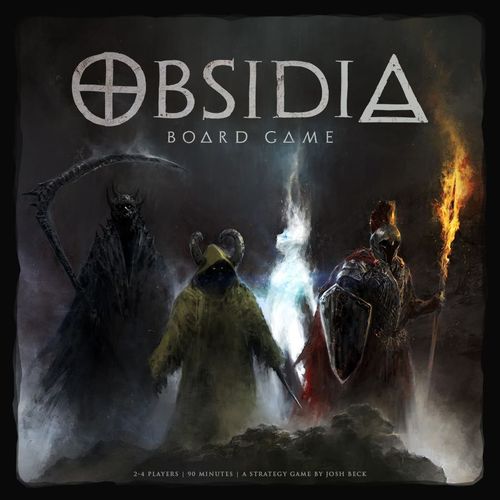
Obsidia
Obsidia Rulebook
Table of Contents
Table of Contents
Colony Lore
Death Legion
The Death Legion are said to be the most ancient beings in existence. They were born at the creation of time and have the ability to wield and manipulate its properties to serve their needs. They have a calm and seemingly emotionless demeanor, but specialize in the ability to bring swift and painless death to any who threaten their idea of natural order.
Long ago, in an attempt to restore balance to their failing, overconsumed world, the Death Legion High Council voted to reverse time. The plan was to take their world back a few centuries and transport the population. This risky spell attempt failed and resulted in a terrible time rift, in what became known as the Mass Entity Duplication. Simply put, they inadvertently created a parallel copy of themselves. The doppelgängers' existence seemed to pose an even greater threat to the homeworld than the problems they had before, so a new vote was passed to banish these "abominations of nature" to the prison realm of Obsidia.
Now, as death creeps over the dark land, the doppelgänger legion, believing they are in fact the true originals, strengthens and grows. If they can control the realm and harness the power of enough dead souls, they may be able to reverse time far enough to escape their banishment and destroy the ones who sent them to Obsidia.
Light Keepers
The Light Keepers are beings of a higher consciousness, tasked with the preservation and stewardship of Obsidia. For a hundred years at a time, groups of young Light Keepers oversaw and kept peace in the realm-- an unpleasant job, but a necessary and honorable one. This system ran smoothly for centuries, but even the lightest souls may fall prey to darkness. A particular cohort of young Light Keepers, intoxicated with power and fueled by arrogance, began to exercise unnecessary control over parts of the realm. They started limiting daylight as an oppressive tool, hoping to rule their subordinates with an iron fist. In doing so they created resentment within the realm, accidentally galvanizing Obsidia to civil war.
Displeased with these failures, the elder Light Keepers served a harsh but appropriate sentence. The young ones were stripped of their stewardship powers and banished to stay in Obsidia for as long as the war rages, imprisoned alongside those whom they sought to oppress.
Now, the young and desperate Light Keepers toil to remedy their mistake by attempting to mitigate the war. They have implemented a permanent darkness in order to focus the power of available light into themselves, which has strengthened their abilities, and energized the underground crystal colony cave where they reside. If they can just regain control and restore the realm to peace, they will earn their freedom.
Warlords
The Warlords were humans. Originally a military unit assembled by Earth's most powerful nations, they were given the objective of exploring a mysterious portal that opened up on a remote island off the coast of South America. The unit entered the strange shimmering light and were never seen again on Earth.
The Death Legion beings who caused the time rift were eventually able to close it, but did not know what to make of these strange semi-intelligent animals who appeared suddenly on their world's doorstep. The humans were soon judged and sent to the Obsidia prison realm. Thrust into the unknown for a second time, they were forced to fight for their lives in a strange and dangerous world. Calling upon their military training and instincts, they were able to thrive and grow stronger. They began cultivating and trading goods, as well as acquiring spell books from the town locals. Learning some of the more basic spells helped even the playing field and allowed the humans to advance, eventually building their own isolated fortress -- an impressive stone castle nestled in the fire mountains of Obsidia. The permanent darkness and harsh living conditions of the realm over many years turned the humans into bloodthirsty killing machines that no longer resembled the people they left back on Earth.
Now, the present generation of Warlords has long since forgotten the stories and myths of their old earthly home. Their current objective is simply to dominate and control Obsidia, the only home they know.
Veiled Occult
The Veiled Occult are the extremists of the Obsidia realm. For centuries, every generation has chosen to devote itself to learning the spells and rituals necessary to appease the ancient gods. They are not free thinkers, but their strength lies in the fearlessness to give their lives for a cause, and in the absolute mastery of their craft. No other class in Obsidia has been able to achieve the Veiled Occult's level of mind control and sorcery.
Their home colony is a desert temple, which is rumored to have been built on top of a mystical portal. The first Veiled Occult members to settle in Obsidia were originally transported by a powerful incantation. It is said that they traveled to the prison realm voluntarily in order to atone for their shortcomings in the eyes of the gods. The leader of that time destroyed the only spell book which could allow a return trip. The blood-bound text was thrown into an endless void and never seen again.
The current generation of Veiled Occult members have come to view their ancestors' sins as their own, and choose to carry the burden for themselves. Their mission is not to return home, but to honor the ancient gods and ancestors. They strive to convert as many of Obsidia's beings to their beliefs as possible; a permanent missionary trip where the only mark of success is total conversion-by word or by magic or by blood.
Game Overview
Take turns exploring the dark realm of Obsidia by placing terrain tiles to create a dynamic and treacherous landscape. Send travelers from your home colony out to found new towns, battling any enemy players or creatures in your path. You'll also cast spells unique to your class in order to gain the advantage. When all of Obsidia's terrain has been discovered, the class controlling the most towns wins the game!
Control one of four different colony classes, each with its own unique spell deck and playing style. No spell card is repeated, and card drafting variants are available for experienced players who don't need to rely on the default balanced decks.
- Death Legion: An ancient and mystical class able to influence time and mortality.
- Light Keepers: An intelligent and peaceful class able to harness the power of light.
- Warlords: An aggressive and efficient class bred for speed and combat.
- Veiled Occult: A mysterious class utilizing sorcery and mind manipulation.
Game Contents
- 01 Game Box
- 01 Rulebook
- 04 Reference Cards
- 04 Custom Dice
- 04 Home Colony Tiles
- 15 World Building Tiles
- 11 Black Terrain Tiles
- 11 White Terrain Tiles
- 11 Red Terrain Tiles
- 11 Yellow Terrain Tiles
- 20 Black Spell Cards
- 20 White Spell Cards
- 20 Red Spell Cards
- 20 Yellow Spell Cards
- 08 Black Traveler Meeples
- 08 White Traveler Meeples
- 08 Red Traveler Meeples
- 08 Yellow Traveler Meeples
- 08 Creature Meeples
- 03 Spell Effect Tokens
Visit playparticle.com for a full list of spell cards. If any descriptions or rules need to be adjusted for clarity, the website will be up to date. Please report any issues or questions there as well.
Terminology
- All-Traveler Battle: No creatures are involved in the battle.
- Friendly Traveler: A traveler belonging to the player.
- Grouped Unit: A group of travelers from the same class on the same tile.
- Ignoring Pathways: Effects are allowed to occur through tile darkness.
- Nearby Diagonal: Tiles touching by their corners.
- Occupants: Travelers or creatures on a tile.
- Outcome: The number on the die after a roll, before any necessary rerolling.
- Pathway-Adjacent: Tiles connected by pathway instead of darkness.
- Reserve: A player's pile of meeple travelers which are not yet active in the game.
- Solo Traveler: A traveler by themselves, not in a grouped unit.
- Survival roll: Rolling dice to meet a numerical threshold in order to avoid death.
Game Setup
World-Building
- Read the four colony class descriptions and choose the one you'd like to play. Collect the reference card, terrain tiles, meeples, and spell cards which have the same color or shield icon. Keep the four wooden dice, three spell effect tokens, and eight creature meeples nearby for all players to share.
Before player turns may begin, terrain tiles must be placed in order to form the initial Obsidia landscape. Any player may start this world-building phase, but tiles must be placed in accordance to the tile placement section on the next page. In clockwise order, players will take turns drawing and placing the top tile from the communal tile stack onto the gaming surface. The number of starting tiles should match with the corresponding number on the chart in the game setup section.
- Shuffle the fifteen world-building tiles. Use the table below to create a randomly selected communal tile stack (face-down), and put the unused ones back in the game box.
No spells may be cast during this phase, but at any point during world-building, a player may choose to place their double-sided home colony tile instead of drawing a communal terrain tile if they see a good opportunity. Home colonies serve as starting points on the board, and players may choose which side of their home colony tile to play face-up.
-
Shuffle your personal terrain tiles and stack them face-down, but make sure your double-sided home colony tile is on top.
-
Shuffle your spell deck of twenty cards and place it face-down in front of you. Draw five cards to make up your private starting hand.
If any home colony tiles remain unplaced once the communal tile stack is depleted, clockwise order will continue for the remaining players to place their colonies, skipping players where necessary.
See page 11 for rule variants / set-ups for solo mode, 2vs2 games, card drafting, and tile planning games.
Once all world-building tiles and colonies are placed, the game will begin.
You may also learn how to play Obsidia by watching our rules videos at playparticle.com.
Tile Placement
Terrain tiles must always be placed adjacent to at least one other tile, but don't have to connect by pathway. Edges must match on all shared sides, either by pathway or complete darkness. Floating tile placements are not allowed, but may happen later in the aftermath of spellcasting. If a tile cannot legally be placed, it is removed from the game and gameplay will continue without tile placement for that action.
Town tiles may never be placed adjacent to other town tiles or home colony tiles if they are connected by a direct pathway, as depicted on the tile art. Towns may be placed adjacent to other towns or home colonies only if their shared side is complete darkness with no direct pathway.
Home colony tiles may be placed adjacent to enemy home colonies by a direct pathway, but may never be placed adjacent to town tiles connected by a direct pathway. Colony tiles are double-sided and players may choose which side to play.
Diagram captions: Adjacent tiles connected by a direct pathway · Tiles where the shared side doesn't match · Adjacent tiles connected by complete darkness · Town tiles connected by a direct pathway · Two adjacent home colony tiles · Pathway-connected colonies and towns · Example of possible world-building placement for a game with 4 players.
Terrain Tile Types
Plain Pathway
Traveler meeples must typically stick to these paths when moving. Some spells may call to ignore pathways, which allows or forces travelers to cross tiles through the darkness.
Home Colony
Players may train one new traveler per turn on their own home colony tile. These travelers may begin their journeys in the upcoming movement phase. Travelers may not typically occupy enemy colonies, therefore entering by regular movement, teleportation, replacement, swapping, spawning, or forced movement will result in instant death. If travelers are allowed to enter/occupy enemy colonies by spellcasting they are safe (even after spell wear-off), but must leave during their next movement phase to stay alive.
Town
Capturing and holding towns is the objective of the game. Travelers who move off of a town tile during their movement phase (by choice) may recruit a town local to hold the town once the original traveler or group moves off. Exactly one traveler may be pulled from the player's meeple reserve to stay in the town. New town recruits cannot move during the current movement phase, but once recruited, town locals become normal travelers and members of their class. A town tile that has been placed in the gaming area but has not yet been claimed is known as a "neutral town." Players may claim neutral towns or capture "enemy towns" by entering the tile with a traveler (or group of travelers) and surviving any necessary battles. If the traveler is still in the town when the battle phase is over the town will become a "friendly town" to that player. Town tiles with more than one occupying class are referred to as "shared towns," and do not count as "friendly towns" or "enemy towns." If a traveler leaves a town and does not (or cannot) train a traveler recruit to stay behind and hold the town, it becomes neutral again. In cases where travelers leave a shared town, no new travelers may be recruited. Players may still recruit when leaving a friendly town voluntarily by spellcasting.
Blackwater
Travelers entering blackwater tiles must immediately make a survival roll of 4+ on two dice. Travelers in grouped units must each roll separately, and travelers who fail are killed and removed from the game. Travelers who don't leave the tile on the next movement phase must re-roll for survival. Entering blackwater tiles by teleportation, spawning, or forced movement will also require survival rolls, while traveler replacement or swapping will not.
Woods
Travelers may enter woods tiles without harm or effect, but will likely get lost when trying to leave. Upon exiting, players roll one die to find out which path they must take, marked by stones depicted on the tile art. Travelers in groups must each roll separately (which means they may split up) and players may also choose not to roll for all travelers in the group. Rolling for woods exit does not count as a survival roll. Unless otherwise noted, travelers who are forced to leave woods tiles do not need exit rolls. An exit roll leading to a tile that is illegal to enter will result in no movement for the traveler.
Ice Field
Travelers entering ice fields will slide through the tile in the same direction they entered, giving them an extra movement. Travelers cannot change directions while sliding through ice field tiles. Travelers must stop on the ice if any creatures or travelers are already on the tile, or if more than one traveler is forced onto it at the same time from different directions by spellcasting. Travelers also must stop on an ice field tile if entering via spellcasting by teleportation, replacement, or spawning. Once stopped on an ice field, travelers may change directions the next time it is legal for them to move.
Void
Without any protection spells, travelers and non-native creatures entering void tiles are killed immediately. Entering voids by teleportation, spawning, replacement, swapping, or forced movement will also result in instant death.
Boneyard
Travelers standing on boneyard tiles get the advantage in battle since their 1 outcomes are always re-rolled. If both enemies in the battle are standing on a boneyard tile, neither player can roll a 1, so all 1 outcomes should be re-rolled. If a player is using a spell to roll multiple dice with the ability to choose the highest outcome, all 1 outcomes are re-rolled before the final outcome is determined.
Mystical Portal
Travelers entering mystical portal tiles are unaffected. Travelers already on mystical portals at the start of their movement phase may travel instantly to another mystical portal as their regular movement. Grouped units must travel as one to a single portal destination. Travelers on distant portals do not count as adjacent from one another.
Player Turns
The player who was last to place their home colony tile will now be the first to take their turn. Player turns will unfold as follows:
-
Tile Phase: Draw and place a new terrain tile from the top of your stack. If your tile cannot legally be placed, remove it from the game and continue your turn without placing. If you have any tile phase spells in your hand, you may cast them. Unless otherwise noted, tile phase spells may be cast before, during, or after your tile drawing and placement.
-
Training Phase: You may pull one traveler from your meeple reserve to be trained on your home colony tile. If your reserve is empty, no new travelers may be trained. A newly trained home colony traveler will be able to move in the upcoming movement phase. If any travelers already occupy your home colony tile, the travelers will form a grouped unit, and must move together. If you have any training phase spells in your hand, you may cast them during this phase. Creatures may be summoned by specific spells in your hand during this phase, and are represented as wooden meeples.
-
Movement Phase: You may move each of your active "friendly" travelers one space along the depicted pathways, or more spaces when playing movement spells. If you have travelers on any towns you may move them off the tile and pull one traveler from your reserve to take their place. The new traveler recruit will hold the town, but cannot voluntarily move until your next movement phase. If you decide to move any travelers onto a tile already occupied by your own travelers, the new grouped unit will forfeit any additional movement on this turn since no travelers may typically move twice, and groups, once formed, must stick together. Movement orders are flexible in that players may choose the order of their traveler and group movements, and may also readjust the order to their liking during the current movement phase, as long as no spells have been cast, or dice have been rolled. Some terrain tiles have special properties that need to be addressed immediately when a traveler or group enters, exits, or begins battle. A traveler entering or beginning to occupy a special terrain type must always resolve that terrain property before any battling may occur.
-
Battle Phase: Use dice and spellcasting to resolve all pending battles involving your travelers. You must also resolve battles where any creatures you've summoned are attacking other players. Battles taking place on the same terrain tile must be to the death, and must be resolved before any battles taking place on adjacent tiles connected by a direct pathway. Adjacent enemies whose tiles share a side of complete darkness will not battle. Only adjacent tile battles may end in a draw.
Spell Casting
Basics
Spells may be cast during their designated phase on that player's turn and there is no limit to the number of spells a player may cast once the cards are in their hand. Cards marked with "O" are open and may be cast during various phases, including phases in other players' turns. For the purposes of spellcasting, "nearby diagonal" tiles are not considered adjacent from one another. Unactionable spell casting is not allowed, which means a spell card can only be played if there's potential for at least some of its effects to be utilized.
Most spells of a given phase may only be cast by the current player of that phase, however, battle spells are an exception. Unless otherwise noted, both players in a given battle may cast battle phase spells. Since the player currently taking their turn decides and announces when their battle phase begins, they are given spell initiative, which is the opportunity to cast the first spell of each battle in the phase. Depending on the particular battle spell, they may be cast before or after a battle by either player, but not between dice rolls in battles where multiple dice rolls take place. There are, however, some "O" spells which can be cast to alter dice rolls during a battle, and may sometimes be cast by players not in the battle. Some battle spells are played face-up and may be stacked or negated before the battle (dice rolling) officially begins. Other battle spells are resolved immediately, making it possible for a battle to end before the dice are even rolled. Negated or unfulfilled spells are discarded.
Resolve Order
Once cast, most spell cards take immediate effect. Additional spells may be cast to alter gameplay, but only after the first spell's effects are resolved, or activated by being played face-up. Once a player states that they want to cast a spell, the effects are final, and they must follow their initial stated intent (assuming the play is legal). Additionally, once a player starts a new turn phase they cannot go back to a previous phase to cast any overlooked spells.
Once both players agree to roll the dice and begin battle, active spells which have been played face-up can then take effect. In rare cases, certain spell combos may cause players to keep rolling the same outcome in battle, creating an endless loop. In such cases, all travelers or creatures involved in the battle are killed and there is no winner. In rare cases where multiple battle spells directly contradict each other so that no winner is possible, the relevant spells will cancel out and are discarded, allowing the battle to play out.
Affecting Enemy Movement
Sometimes players may speed through their movement phase quickly while enemies are still looking over their "O" spells and deciding whether to use them. A player may ask the current player to slow down or reverse some movements in order to cast a spell affecting certain traveler movements in the current phase, as long as no additional spellcasting or dice rolling has taken place. Once a movement-affecting spell is resolved or activated, the current player may continue their additional traveler movements.
Creature Spells
Each class has the ability to summon creatures with spell cards. Creatures have limitations on where they may be summoned and cannot typically move or be controlled by any player. They also cannot capture or claim towns. Creatures may, however, be summoned onto a terrain tile already occupied by a traveler or another creature. Creatures do not need to roll for survival when summoned since they are unharmed by their native terrain properties.
Creatures are typically hostile toward everything, even the travelers in the class that summoned them, and they do not count as travelers or members of any class. Creatures will battle travelers or creatures sharing a tile, and travelers or creatures connected by a direct pathway. In cases where players must battle their own creatures, anyone may roll for the creature. Creature battles will unfold just like regular traveler battles. If there are no pending traveler battles for the current battle phase, the player taking their turn must still resolve any battles where their creatures are attacking other players. Use the appropriate creature meeples to mark the tiles.
Hand Replenishing
Replenishing a hand signals the end of a player's turn. If a player forgets to replenish their hand at the end of the turn, it will be too late to draw from the spell deck once a new spell is cast by any player. Spells that are freshly drawn while replenishing a hand may not be cast or discarded on the same turn.
Discarding
When a spell is resolved, negated, or no longer active, it should be discarded into a face-up discard pile near the spellcaster's deck. A player may also discard one unused spell from their hand each turn (during the spell phase) as long as it wasn't drawn in the current spell phase while replenishing a hand. Other than the top card, discard piles are not typically accessible to any players.
Depleted Decks
When a player runs out of spell cards in their deck they must continue to play without drawing new ones. If every player in the game runs out of spell cards in their decks and hands, players will then reshuffle their discard piles and continue the game with fresh spell decks. Any cards currently in play (face-up) on the gaming surface during a reshuffle will remain in play. Players holding spells acquired from an enemy deck will keep those new spells during a reshuffle.
Travelers & Movement
Basics
A player may typically only move their own travelers, and may do so only during their own movement phase. Unless otherwise noted, travelers may move one space per turn, and only to an adjacent tile connected by a direct pathway. Travelers who move onto the same tile as other friendly travelers will form a grouped unit, which now must move as one.
Grouped Units
Players may group together their own travelers by moving them onto the same terrain tile. Grouped travelers must typically move as a single unit. A player cannot move a traveler onto another tile to form a group, and then continue to move the new larger group onto another tile. Merging the travelers into a group forfeits any further group movement. Since grouped units move together and fight together in battle, they cannot utilize spells which specify use for a "solo traveler." Grouped units can typically only be split up when travelers roll separately for woods exits. Travelers in groups always take survival rolls individually, which means they can also leave the group by dying.
Traveler Death
Throughout the game, travelers may die from battles, harsh terrain tiles, enemy spells, or moving off incomplete pathways where new tiles cannot be placed. Dead travelers are removed from the gaming area and placed back into their players' meeple reserves, ready to be trained or recruited again, even within the same turn phase. If a terrain tile or spell allows for it, a player may end their own travelers' lives for the greater good of the colony.
Recruiting
Another way for a player to get more travelers on the board is to recruit town locals. In order to do this, a player must first claim a new town or completely capture an enemy-held town. Once a player has control of a town, in their next movement phase they may move their traveler(s) off of the town tile and then pull exactly one new traveler from their reserve and place it on the town. This new traveler recruit will hold the town while the original traveler or group moves on. Since new town recruits were not present at the start of the movement phase, they may not move (or recruit additional travelers of their own) until the player's next movement phase, or until forced to move by enemy spellcasting. Travelers who are forced to move will not be able to train new recruits.
Movement Exceptions
Sometimes travelers are given the ability to move more than one space via spell casting or ice field tile, and in rare cases, these extra movements may stack. Travelers may not take any extra movements through an occupied tile, or after surviving a blackwater roll. Travelers passing through a town by extra movement may not recruit. If a traveler moves, or is forced to move, off the edge of a tile's pathway into an empty space, the player will immediately draw and place a new tile from their stack to explore the unknown terrain. If the drawn tile cannot be placed in the empty space, it is discarded and the traveler is killed, presumed lost in the darkness. Travelers moving to an empty space by teleportation follow the same rules, but keep in mind that floating tile placements are not allowed.
Battling
Basics
Enemy travelers occupying the same terrain tile must battle to the death. Enemy travelers on adjacent terrain tiles connected by a direct pathway also must battle, however, draws are possible. No battling will take place between diagonal tiles, or when adjacent enemies are connected by darkness instead of a direct pathway.
Battle Order
The battle phase begins after a player has completed all of their intended traveler movements, and after any special terrain obligations. A given battle phase will consist of battles involving the current player's travelers, and battles involving any creatures they have summoned. Pending battles solely between other players are ignored until those players' turns come around, however, creatures that are causing a threat to the current player must also be dealt with, no matter who cast them.
The player currently taking their turn may choose the battle order when there are multiple pending battles, however, same-tile battles must always be resolved before adjacent battles. A traveler or group surrounded by many enemies, will need to survive multiple separate battles to stay alive.
Battle Initiative
Since the current player decides battle order, they are given initiative to cast the first spell of each battle in their phase. Once they call out a spell (or defer), the enemy player is given their chance to cast a spell. Battle spell casting is done in an alternating pattern until both players defer and decide to roll the dice, officially beginning the battle. Once dice have been rolled, players may cast additional relevant spells at will. There are also certain "O" spells which allow other enemy players to interfere with the battle at this time.
Battle Dice Rolling (Adjacent-Tile)
The current player should identify which battle they are ready for. After any initial battle spells are cast, players will agree to begin dice rolling to officially begin the battle. Players typically roll one die each, and the player with the lower outcome will lose their traveler, and the entire battle. If the lower outcome player is battling with a grouped unit, the battle is not over and they will simply remove one traveler from the group, and the battle will continue with additional single dice rolls by both players until a winner is left standing.
If at any point enemies roll the same number on their dice, the battle will abruptly end in a draw, and the current player will move on to other pending battles. If a player rolls a number that they cannot roll due to active spells or terrain properties, only that player's die will be re-rolled.
Battle Dice Rolling (Same-Tile)
Since draws may not occur on same-tile battles, all identical dice outcomes between enemies must be re-rolled. Travelers must be killed off until one class has been completely removed from the battle tile and a winner has been determined.
Winning the Game
Basics
Gameplay will continue until all players run out of terrain tiles, signifying that all of Obsidia has been explored. Once the very last playable terrain tile in the game is placed onto the gaming surface, that player will complete the rest of their turn to the end of the spell phase. After all battles are resolved and relevant spells are cast, the player controlling the most towns wins the game.
Sudden Death
If two or more players are tied for holding the most town tiles, the game will continue with all players in sudden death. The first player to hold the most number of town tiles after any completed turn wins the game. This can happen when a player claims/captures a new town, or when a player who is tied for the lead simply loses a town.
Rule Variants
Card Drafting Games
Obsidia players may wish to draft custom spell decks instead of using the default class decks. During setup, players will privately choose three spells from their native class' deck and pass the remaining seventeen cards to the next player in clockwise order. They'll choose an additional spell from the new cards they've been handed, and then continue passing cards and selecting a new spell until all players have a custom deck of twenty spell cards.
For two player card drafting games, all four spell decks are used in order to preserve secrecy. The two players will take turns drafting from the unused class decks, and then they'll privately create a custom deck of twenty, mixing their native class deck with the newly drafted spells.
Tile Planning Games
Obsidia players may wish to remove the random tile-drawing element from the game. If all players agree, custom tile selection will be allowed during all tile phases and placements. This rule may be implemented on its own, or paired with card drafting games for maximum strategic allowance. With this rule in play, any spell referring to the "top tile" of a tile stack should be altered so that a random tile is targeted instead.
2vs2 Games
Obsidia players may wish to team-up instead of playing in the default free-for-all format. When reading spell cards during these games, the ally travelers of a given player are neither defined as "enemy" travelers or "friendly" travelers. Allied classes will not battle each other, and do not form grouped units when occupying the same tile. Spell hands may also be traded freely between allies during both players' spell phases. The winning team will be the one with the highest sum of controlled towns after the final turn.
Solo Play Rules
Vanquish the undead enemy horde.
Setup
A solo play game uses all fifteen world-building tiles and all four home colony tiles, shuffled and stacked together. The Obsidia world map is built first, and then the player may decide which colony class to align with and control. The other three colonies will belong to The Undead Enemy Horde. The player's alliance choice will reflect the difficulty of the game since colony placement affects the chances of winning against The Horde. Any home colony tile placements assigned to The Horde attached only by darkness should be moved or reoriented, otherwise the game will be too easy. If any home colonies cannot be placed legally, the player must make adjustments to the layout to accommodate all home colony tiles.
The player collects their associated tiles, traveler meeples, and spell cards. The remaining tiles should be removed from the game since The Horde won't be using them. The remaining meeples will represent the undead enemy travelers of The Horde. With the remaining three spell decks, the player should separate all Phase II and Phase IV spells and shuffle them together to make up the enemy spell deck. The top five spells should be drawn and laid face-up in a row, making up the enemy spell hand. Phase I, Phase III, Phase V, and Phase O spells are removed and added to the solo player's deck, which should be shuffled as well. Card colors are irrelevant in solo play decks.
Basics
The player will begin the game by drawing their five-card hand, and then taking the usual turn phases. The Horde will go next, using special rules and methods to resolve actions. Any time a member of The Horde dies, that undead traveler is permanently removed from the game. No Horde traveler should ever return to the reserve.
The Horde
The Undead Enemy Horde operates as one single class/player for the purposes of reading spell cards, but is considered to be three separate entities when it comes to colonies and travelers. The three separate entities are not hostile toward each other. Different colored travelers may share the same tiles without forming grouped units, and will battle the solo player separately from one another. Summoned creatures treat all three entities the same. If at any point The Horde acquires a spell card from the player's mixed deck which they cannot use (Phase I, Phase III, Phase V, or Phase O) it is immediately discarded. Once The Horde's spell deck is depleted it will not be reshuffled.
When resolving The Horde's spells, effects should be read from the perspective of The Horde (for example, the word "enemy" will refer to the solo player). If there are choices to be made about how or where to apply the spell's effects, or if there are multiple movement or battle possibilities, the player should designate options and roll dice for resolution. Sometimes The Horde's choices will have many branching possibilities, and it will be up to the player to creatively resolve each choice.
At the start of each Horde turn, tile phases will be skipped, and the rest will unfold as follows:
ii. Training Phase
The Horde will train a new undead traveler to each home colony tile in its associated color. If any particular reserve is empty, meeples of another color may not be used for that colony. Reading and resolving the Horde's spell hand from left to right, any Phase II spell cards that can be played legally, must be played.
iii. Movement Phase
Undead travelers, in clockwise order by color, will always move toward the nearest town, however, they will prefer not to share a town with another color. If the nearest town tile is already occupied by the travelers of a different Horde color, they will move toward the next closest town tile. This can cause undead travelers to change course. If there are multiple towns equidistant to the undead traveler or group, dice are used to resolve the path on each movement. Undead travelers who are already on town tiles are content and will never leave voluntarily. Whenever The Horde's travelers are moving in a "follow the leader" formation they will always attempt to order their movements front-to-back to maximize movement.
Following appropriate pathways, undead travelers will always try to take the shortest distance by number of tiles. They do not care about blackwater, woods, or void consequences, so those tiles are counted as normal. The Horde does not comprehend ice field mechanics either, which means they might slide forward against their wishes. They will, however, use portal teleportation if it's the fastest route, and they will never try to enter the solo player's home colony by choice. They are granted safe passage when entering other Horde colonies, but any undead travelers forced into empty spaces without tiles are killed.
iv. Battle Phase
Battles will unfold as normal with dice and Phase IV spell cards. All pending creature vs. creature battles are resolved first, and then The Horde will attack any leftover creatures. Same-tile traveler battles involving the player's travelers are resolved next, and finally the adjacent ones. In cases where there are multiple battles within each category, dice are rolled to first decide the battle resolve order.
The Horde will always cast battle spells available in their hand, chosen from left to right, but they'll only play one spell card before a particular battle begins. Battle spell initiative rules still apply. Battle spells which can be cast at the end of a battle will also be cast whenever they become legal to play, but the player will always have the option to cast first when a battle is over.
v. Spell Phase
The Horde will not discard any unused spells, and their hand should be replenished by drawing cards to fill in any open gaps, which signals the end of The Horde's turn.
Solo Play Win Conditions
In order to win a solo play game, the player must kill all twenty-four travelers in The Undead Enemy Horde, and also have at least one friendly traveler alive. Creatures do not count for either side. If there are any undead travelers still standing after the player places their final terrain tile, resolves pending battles, and finishes the spell phase, The Horde wins.