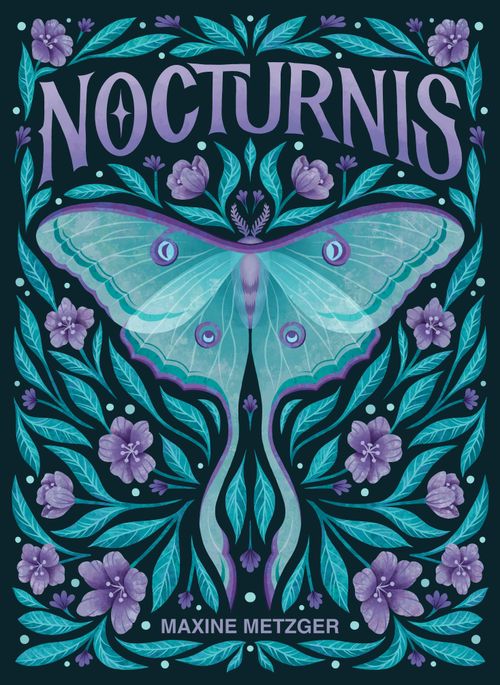
Nocturnis
Nocturnis Rulebook
Table of Contents
Table of Contents
Components
Component list as printed on the cover (heading added for layout).
- 50 game sheets (double-sided)
- 36 moth cards
- 19 habitat cards
- A pencil for each player
Game Setup
- Take a game sheet each and place it in front of you. This is your garden. Decide which side of the game sheet you want to play.
- Each player takes a pencil.
- Shuffle the habitat cards and place them in a face-down stack.
- Shuffle the moth cards and place them in another face-down stack. Then place 3 moth cards in an open display.
- Each player draws 2 cards from the moth card stack.
- You are ready to start! Draw the first habitat card from the stack and place it face up in the center of the table. Each player must mark their first shape in one of the 4 corners of their garden. Each additional shape must be drawn orthogonally adjacent to an existing shape.
Gameplay
Reveal a new habitat card for each new round. In each round, every player chooses individually whether to mark the shape or draw 2 moth cards. If one of the decks is empty, shuffle the discard pile to form a new deck.
Marking Shapes & Luring Moths
When marking the shape from this round's card, you may rotate or flip it. To play a moth from your hand, you have to combine all the depicted symbols in a single shape. The arrangement of these symbols does not matter. There may be additional symbols within the shape. You may play one moth per habitat. Shade the area to mark it clearly. Place the moth card in front of you and mark the respective moth with a little cross on your game sheet. You will receive points for this at the end.
Each moth can only be lured as many times as you have space for crosses on your game sheet. When you lure a moth, immediately carry out the effect shown in the top right corner of the card. Afterwards, you place the card on the discard pile.
Diagram as printed: a moth card with the Effect callout (top right corner) and the Points callout (lower right corner), shown beside a marked game sheet.
Atlas Moth: The atlas moth is the biggest moth in the world. To lure it, you must first have the cards with both halves in your hand. If you can combine all 5 symbols within one shape, you play both cards to lure this moth.
Drawing Moth Cards
When drawing moth cards, you may decide individually for each card whether you want to take one from the display or draw a face-down card from the stack. When taking a card from the display, immediately restock the display from the moth card stack. Your hand limit is 5 cards. If you have 4, you may draw only 1. If you already have 5 cards, you cannot draw and must instead mark the shape this round. Cards are not drawn in any particular order. A player who starts drawing finishes their draw before others may draw.
Game Sheet Extra Rules
The front and back side of the game sheet offer different variants. The front side does not have any special rules. It's best to use this side if it is your first game. On the backside, there are additional effects in your garden: Empty squares may not be marked. Habitats have to be arranged around them. If you manage to include one of the bonus squares within a marked shape, you immediately gain the respective bonus.
Symbol Explanation
- +X (plus-X symbol): You may immediately draw up to X moth cards.
- X points (star symbol): You gain X points.
- + habitat symbol: You immediately have to mark an additional habitat in the depicted shape. If you can, you may lure another moth in doing so.
Exchange Action
Each game, you may use your exchange action up to 2 times. You may use this action at any time, additionally to your mark or draw action. First, you may discard the entire display and refill it with new moth cards from the stack. Then, discard 2 of the moth cards from your hand and draw 2 new moth cards. Afterwards, mark the exchange action on your game sheet.
End of Game
Continue revealing habitat cards until no player can mark any more shapes. As soon as you can no longer mark a shape and cannot draw any more cards, the game is over for you. Other players can continue playing as long as they can still mark shapes or draw cards.
Scoring
When no one can mark any more shapes, the points are counted. Add up all the points you have received for luring moths. If you have lured a moth 4 times, you get an extra point.
If you lured each of the 7 different moths at least once, you receive 2 additional points. If you lured each moth at least twice, you receive another 2 points extra.
For each exchange action you have used, one point will be deducted. The player with the most points wins. In the event of a tie, the player who lured the most moths wins. If there is still a tie, you share the victory.
Example scoring sheet (as printed): the first moth is worth 1 point. Luring it 4 times earns you 1 additional point. Since you lured all 7 moths at least once, you score 2 bonus points.
Solo Game and Scoring
When playing solo, you can earn stars depending on your final score:
- Under 45 points: 1 star
- 45-55 points: 2 stars
- Over 55 points: 3 stars
You can also write down your score and try to beat your high score each round.