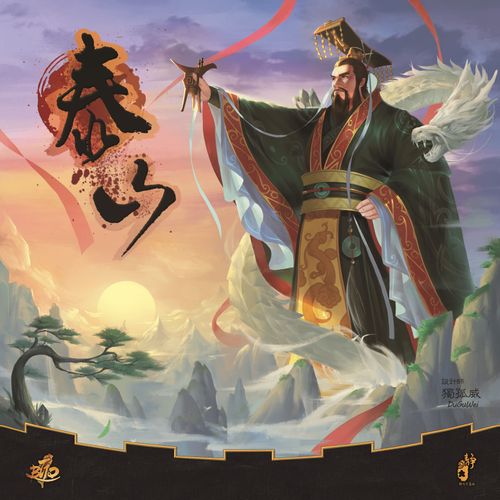
Mount Tai
Mount Tai Rulebook
Table of Contents
Table of Contents
Components
The component list follows page 01 of the source rulebook. The items unlocked through the crowdfunding campaign are listed separately after the base contents.
- 1 Main Board
- 4 Player Boards
- 60 Terrain Tiles (open side: frontier; back side: farmland and town)
- 4 Large Mountain Range Tiles, 4 Small Mountain Range Tiles and 1 Summit Tile
- 8 Eight Praises of Mount Tai Trial Tiles
- 18 Building Tiles (3 each of 6 kinds)
- 32 Event Tiles (8 each in 4 colors)
- 4 Event Bonus Tiles
- 1 Round Marker
- 4 Reputation Markers (1 each in 4 colors)
- 4 Ascent Markers (1 each in 4 colors)
- 60 Player Markers (15 each in 4 colors)
- 8 Meeples (2 each in 4 colors)
- 116 Edict Tiles (29 each in 4 colors)
- 13 Talent Cards (3 each in green, yellow and blue; 4 in red)
Crowdfunding Edition contents (page 01 of the source, "unlocked through crowdfunding"):
- 4 Talent Cards (red)
- 5 Fan Design Talent Cards (red)
- 8 Grand Tutor Cards (太傅)
- 1 Event Tile "0"
- 5 Conspirator Target Markers
- 8 Scholar Markers (study markers)
- 10 Executive Officer Markers (execution markers)
- 1 Master Builder Marker (architect marker)
- 1 Mount Tai historical background booklet
- 1 Huizhou Merchants promo tile
- 1 Pingyao Branch promo tile
- 1 Philanthropist donation track
- 2 Building Tiles
Board Areas
The areas are labelled on the setup diagram (page 02) and the area guides (page 02).
Player board:
- Edict area (政令エリア)
- Quick reference area (早見表エリア)
- Building area (建築エリア)
- Talent area (人材エリア)
Main board:
- 3D mountain area (立体山脈エリア)
- Personal fief area (個人封地エリア)
- Resource track (資源トラック)
- Reputation track (名声トラック)
- Round track (ラウンドトラック)
- Seasonal settlement area (季節決算エリア)
- Event area (イベントエリア)
- Event bonus area (イベントボーナスエリア)
- Eight Praises year 1 area (八讃1年目エリア) and year 2 area (八讃2年目エリア)
- Turn order area (行動順エリア)
Other areas:
- Wilderness area (在野エリア), where the unrecruited talent cards are placed
- Blueprint area (設計図エリア), where the building tiles are placed
- Philanthropist donation track (慈善家-寄付トラック)
Setup
1. Main Board Setup
- Map. At the center of the 3D mountain area of the main board, join the 4 large mountain range tiles to form a square. Place the 4 small mountain range tiles on top of the large mountain range tiles, joined around the center to form a square. Finally, place the summit tile on the center of the small mountain range tiles. The 3D board area is now built. (The positions and orientations of the large and small mountain range tiles on the 3D board area are all placed at random.)
- Event and bonus tiles. Mix the event tiles together and divide them by color and player count (in a 4-player game, place all of them; in a 2- or 3-player game, place them according to the player-count marks in the event area). Place them face up on the event area of the main board. Then randomly place the 4 event bonus tiles face up in the event bonus area. You may also mix in event tile "0" and, after randomly removing one blue event card, place the tiles.
- Eight Praises of Mount Tai trial tiles. Randomly take 4 Eight Praises trial tiles and place them, with the year 1 mark face up, next to the year 1 area of the four seasonal settlement areas. Place the remaining 4 Eight Praises trial tiles in the year 2 area of the four seasonal settlement areas, with the year 2 mark face up.
- Talent cards. Mix the talent cards separately by color, then take the cards for the player count, as shown in the table below. Set them beside the main board to form the supply piles in the wilderness area (在野エリア). At the start of the game, flip the top card of each supply pile face up.
| Talent card (color / portrait) | 1 | 2 | 3 | 4 | 5 |
|---|---|---|---|---|---|
| 2 players | 1 | 1 | 1 | 2 | 2 |
| 3 players | 2 | 2 | 2 | 2 | 2 |
| 4 players | 3 | 3 | 3 | 2 | 2 |
Columns 1 to 5 are the five talent card columns, in the order shown on the printed table. Rows are the player counts, shown on the printed table with 2, 3 and 4 figures respectively.
- A talent promo card may also be mixed in with the talent cards and drawn at random during setup.
- Building tiles. Choose building tiles according to player count. In a 4-player game, all of them are used. In a 2- or 3-player game, remove one of each of the 6 kinds of building tiles. Mix all the chosen building tiles together and place them face down in the blueprint area to form the supply pile. Then, according to player count, flip building tiles from the supply pile into the blueprint area:
- In a 4-player game, flip building tiles from the supply pile face up into the blueprint area. If a flipped tile has the same name as a building tile already in the blueprint area, stack them together. Stop when you have flipped 4 different kinds of building tiles.
- In a 2- or 3-player game, flip until you have flipped 3 different kinds of building tiles.
- For the Observatory and Garrison building promo tiles: after choosing building tiles according to player count, mix them together with the chosen building tiles and place them.
- Round marker. Place the round marker on the "first round" space of the round track.
- Terrain tiles. Set the terrain tiles aside next to the main board.
2. Player Setup
Each player chooses one color and takes all the policy (Edict) tiles of that color, a player marker, a reputation marker, a meeple and an ascent marker.
-
Edict tiles. Shuffle the edict tiles face down separately according to the three groups 【I】, 【II】 and 【III】. Place the 【III】 edict tiles face down in a 4×4 square in the edict area of the player board, then turn them face up. On top of that square, place the 【II】 edict tiles face down in a 3×3 square, then turn them face up. Likewise place the 【I】 edict tiles on top, as shown in the diagram.
-
First settlement. Each player places one settlement tile at the lowest corner of the 3D mountain area nearest to them. This is their first development site. The 4×4 square of area extending from the first development site is the player's personal fief (one quarter of the 3D mountain area). During play, a player may not move out of their personal fief area, the action development area.
-
Starting resources. Each player places 3 of their player markers on the main board's resource track: money on "6", grain (food) on "2", and wine on "0". These are the starting resources.
-
Turn order. The youngest player becomes the start player, and the other players become the 2nd, 3rd and 4th players in clockwise order. Each player places their meeple in the small square next to the number of their turn order in the turn order area. Players act in turn order.
Even during the two-year competition, the elder brothers have decided to keep yielding the first move to their younger brother.
-
Reputation. Each player places their meeple on "0" of the reputation track. Players in 3rd and 4th place gain 1 point of reputation compensation (in a 3-player game, only the 3rd player gains 1 point; in a 2-player game there is no reputation compensation).
Game Flow
The game lasts 2 years in total. One lap of the time track represents one year. Each year has four seasons, which proceed in the order spring, summer, autumn, winter. The game starts in spring and advances clockwise around the time track (the first seasonal settlement is in spring).
Each season has 2 rounds, and after the 2nd round the seasonal settlement phase begins.
After each round and each seasonal settlement phase, move the round marker to the next mark on the round track.
Each round is divided into 3 phases:
Policy Decision phase → Turn Order Change phase → Event Activation phase
Phase 1: Policy Decision Phase
Players carry out their policy decision phase in turn order (by their turn order). In this phase, the player chooses one of the following two actions:
-
Policy action. The player takes one of their uncovered edict tiles and places it on an empty space of the turn order area. Then the player executes the action effect(s) of that edict tile according to its tier. (For the action effects, see page 06.)
- Edict tile 【I】: the tile has only one action effect, which is executed. (4 tiles, numbers 1–4, upper layer.)
- Edict tile 【II】: the tile has two action effects; choose one of the two and execute it. (9 tiles, numbers 5–13, middle layer.)
- Edict tile 【III】: the tile has two action effects, and both may be executed. The order of execution is chosen by the player. (16 tiles, numbers 14–29, lower layer.)
Example (policy action): The red player has turn order 1, so during the policy decision phase the red player acts first. The red player chooses a policy action and places uncovered edict tile 18 on an empty space of the turn order area. Because tile 18 is a 【III】 tile, the player may execute both action effects on the tile, and decides the order of execution.
-
Tidy-up action (整頓行動, shown with a crossed-out icon). The player must remove one uncovered edict tile. Then the player may remove one more uncovered edict tile. Of the tiles removed, the player chooses the tile with the lowest number and places it on an empty space of the turn order area. (Printed in red: the player must remove one edict tile, and afterwards may choose whether or not to execute it.)
Example (tidy-up action): Shown in the source diagram on page 04 (the red player's tidy-up of uncovered edict tiles and placement of the lowest-numbered tile on the turn order area).
Translator's note: the printed text of the tidy-up action (the red sentence) is ambiguous as to whether the second removal is optional or whether the chosen tile's effect is optional. This section is transcribed as printed.
Phase 2: Turn Order Change Phase
Players rearrange the meeples in the turn order area according to the numbers of the edict tiles, in ascending order. The meeple with the smallest number becomes the first player in turn order, and the new turn order is formed in the same way for the rest. Then remove the edict tiles from this area. (If numbers are the same, keep the original order.)
Example (turn order change): The edict tiles in the turn order area are red 3, green 26, yellow 15 and blue 15.
- The players rearrange the turn order by the numbers of their edict tiles. The red player's edict tile has the smallest number, so red becomes first in turn order. The yellow and blue players both have 15, so they keep their original order: yellow becomes second and blue third. The green player's edict tile has the largest number, so green becomes fourth.
- Then the edict tiles in the turn order area are removed, and the turn order change phase ends.
Phase 3: Event Activation Phase
In turn order, each player activates one event tile from the event area of the current round. The player then flips the tile over and immediately gains the resource or reputation shown. If the type of resource or reputation gained is the same as the type of the event bonus tile of the current season, the player gains one more of that resource or reputation.
- Yellow event tiles: tax collection (税収).
- Green event tiles: hunting and gathering (狩猟採集).
- Blue event tiles: diplomatic envoy hospitality (使者接待).
- Red event tiles: special events (特殊イベント).
Resources have no upper limit. If a player's resources exceed 10, place one of the player's markers on the "10+" position of the resource track. Each player's marker there represents 10 of the corresponding resource.
After the event activation phase ends, move the round marker to the next mark on the round track, or to the seasonal settlement area.
Example (event activation):
- The event activation phase begins. The red player has turn order 1, so this player activates an event first.
- The event bonus tile for this round is "money" (銭). The red player chooses to activate a red special event and flips the event tile over.
- The red player has 8 money. Because the reward of the event and the resource type of the event bonus tile are both money, the red player activates this event, gains 2 money, and gains an additional 1 money, for a total of 11 money. The red player places the red marker on "10+" and places one player marker on "1" of the resource track. The red player's event activation ends.
- After all players have finished their event activation, the round marker is moved to the next mark on the round track.
Phase 4: Seasonal Settlement Phase
When the round marker reaches the seasonal settlement area, seasonal settlement is carried out.
- During seasonal settlement, building tiles and talent cards may activate their corresponding abilities. First settle the building tiles, then settle the talent cards.
- For each farmland a player has in their personal fief, the player gains 1 grain (food).
- For each town a player has in their personal fief, the player gains 1 money.
- When a player settles a 1st-year Eight Praises trial tile, only the tile in the 1st-year Eight Praises area of that season is settled. If the condition is fulfilled, the player gains reputation.
- When a player settles a 2nd-year Eight Praises trial tile, for each of the tiles in the 2nd-year Eight Praises area of that season, the player gains reputation once each time the condition is fulfilled. In other words, the reputation can be counted repeatedly. (After settlement, this tile is removed.)
- After the winter settlement of the 1st year, flip all event tiles face up and proceed to the 2nd year of the game.
Example (seasonal settlement):
- After the event activation phase, the round marker is moved to the spring seasonal settlement area (1), and the red player begins the spring seasonal settlement (2). (This example is the red player's.)
- First, because the player has no building tiles and no talent cards, these settlements are skipped.
- This settlement is in spring, so for each farmland in the personal fief the player gains 1 grain. The red player has 2 farmlands, so the player gains 2 grain (4).
- Because this is the first year (cycle) of the game, the player settles the 1st-year Eight Praises trial tile "壮矣" ("How magnificent!") in the spring 1st-year Eight Praises area (5). The player has 2 farmlands, so the tile's condition is met, and the player gains 5 reputation (6).
- After all players have finished settlement, this tile is removed (7).
Eight Praises trial tiles (introduction): The tile shows four parts: the name of the Eight Praises, the year of the Eight Praises, the reward reputation, and the condition to be fulfilled.
Game End
- The game ends after 2 years have been played.
- Players gain reputation from talent cards that have reached level 3, through the level-3 skill of that talent. At the end, the player with the highest reputation wins the game. If players are tied, refer to the types of the event bonus tiles corresponding to spring, summer, autumn and winter, in that order. Compare the number of resources of that type each tied player holds, in that order, to decide the winner: the player with the larger number wins. (The talent card abilities are described on page 10.)
Red-text rule: When a player gains 50 reputation points, place their reputation marker on "0" of the reputation track with the 50 side face up, and continue counting reputation on the track. (When 100 points are gained, flip the marker to show the 100 side.)
Edict Tile Introduction
1. Barren Land Cultivation
The player may choose one of the following 2 kinds of action to perform:
- Flat-land cultivation (平地での開拓). The player places one barren tile (荒地タイル) on a side of an adjacent settlement tile, farmland tile or town tile of the same height. This may be done at most 2 times. The player pays 1 money for each cultivation. (Printed in red: diagonal positions are not considered adjacent. Cultivation cannot be done on water sources.)
Example (flat-land cultivation):
-
The red player performs the policy decision phase and chooses to use edict tile 10. This is a 【II】 tile, so only one of its two action effects may be executed. The player chooses the barren land cultivation → flat-land cultivation action.
-
The player places one settlement tile adjacent to their own town on the 1st layer of their personal fief. Then the player places another settlement tile adjacent to their own farmland on the 2nd layer.
-
The player cultivated twice, so the player pays 2 money.
-
Mountain cultivation (山地での開拓). The player places one settlement tile on a side of a tile they already have (settlement tile, farmland tile or town tile) that is at a different height (higher or lower). This may be done at most once. The player pays 1 money for each cultivation. (Printed in red: diagonal positions are not considered adjacent. Cultivation cannot be done on water sources.)
Flavour text: "To cultivate barren land on the mountain is, in the end, an even harder duty!"
Example (mountain cultivation):
- The red player performs the policy decision phase and uses edict tile 10. This is a 【II】 tile, so only one action effect may be executed. The player chooses the barren land cultivation → mountain cultivation action.
- The player places one settlement tile adjacent to their own town on the 2nd layer of their personal fief.
- The player cultivated once, so the player pays 1 money.
Summit tiles: When cultivating barren land on a summit tile, the player places one of their ascent markers (green, blue, yellow or red) instead of placing a settlement tile. (Translator's note: a summit with the player's ascent marker counts as the player's own tile, so the adjacent places can be cultivated.) Flavour text: "The summit is a sacred place; we cannot cultivate or reclaim it."
- Performing cultivation on a summit is called ascent (登頂); after ascending, the player may perform a sacrifice to heaven (祭天). Several players may place markers on the same summit tile.
2. Farmland Reclamation (農地の開墾)
The player chooses one settlement tile, pays 2 money to reclaim it, and turns it into farmland. Replace that settlement tile with a farmland tile. If the tile being reclaimed is adjacent to a water source, no payment is needed. (Diagonal positions are not considered adjacent. Water flows downhill, so a location lower than the water source is considered adjacent, and so are the left and right sides; a higher position is not considered adjacent. Even if the water is outside the player's personal fief, no payment is needed if the tile is adjacent to it.)
Flavour text: "If there is a water source, there is no need to pay extra to build an irrigation channel!"
Example (farmland reclamation, no water source):
- The red player performs the policy decision phase and uses edict tile 7. This is a 【II】 tile, so only one action effect may be executed. The player chooses the farmland reclamation action.
- The player chooses one settlement tile and replaces it with a farmland tile. That tile is not adjacent to a water source, so the player pays 2 money.
Example (farmland reclamation, next to a water source):
- The red player performs the policy decision phase and uses edict tile 7. This is a 【II】 tile, so only one action effect may be executed. The player chooses the farmland reclamation action.
- The player chooses one settlement tile and replaces it with a farmland tile. That tile is adjacent to a water source, so the player does not need to pay.
3. Building a Town (街の建設)
The player chooses one settlement tile, pays 1 money to build a town, and replaces that settlement tile with a town tile.
Example (town construction):
- The red player performs the policy decision phase and uses edict tile 12. This is a 【II】 tile, so only one action effect may be executed. The player chooses the town construction action.
- The player chooses one settlement tile and replaces it with a town tile.
- The player also pays 1 money.
4. Recruitment and Development (募集と育成)
The player may choose one of the following 2 kinds of action to perform:
- Recruitment (人材の募集). The player takes one talent card from the wilderness area (在野エリア) and places it in the talent area of the player board. The player places one player marker on level 1 of that talent card. The player then pays 1 money. Finally, the talent card in the wilderness area that is face down is turned face up.
- Development (人材の育成). The player pays the corresponding cost and levels up one talent card in the talent area of the player board, once. (Printed in red: players must level up in level order.)
- Level 1 → Level 2: move the cube marker from the level 1 position to the level 2 position, and pay 2 money. The player has the level 1 and level 2 skills of the talent card.
- Level 2 → Level 3: move the cube marker from the level 2 position to the level 3 position, and pay 3 money. The player has the level 1, level 2 and level 3 skills of the talent card.
Printed in red: talent cards come in 4 colors, and a player may hold only one talent of each color. Flavour text: "Ask the talents in the wilderness to return home first, and then train them to become my assistants."
Example (recruitment):
- The red player performs the policy decision phase and uses edict tile 4. The player executes the recruitment and development → recruitment action.
- The player chooses the red talent card 醸酒工 (brewer) and places it in the talent area of the player board. The player places one player marker on its level 1 position, and then pays 1 money.
- The player turns face up the talent card that was face down in the wilderness area.
Talent card introduction: The talent card shows its name (人材の名称), its recruitment cost (募集費用), its talent level (人材レベル), its level-up cost (レベルアップ費用) and its skills (人材の技能).
Example (development):
- The red player performs the policy decision phase and uses edict tile 4. The player executes the recruitment and development → development action.
- The brewer is currently at level 2, so the player moves the player marker from the level 2 position to the level 3 position, and then pays 3 money. The player has the level 1, 2 and 3 skills of the brewer.
Example (level 3 brewer at game end):
- At game end, the red player holds a level 3 brewer. The level 3 skill of this card gives 1 reputation for each wine held.
- The player holds 3 wine, so the player gains 3 reputation.
5. Building Plan (建築計画)
The player takes one building tile from the blueprint area that the player does not yet have, places it in the building area of the player board, and pays the corresponding cost. The player then may use that building tile's ability. If the number of building tiles in the blueprint area is less than the number specified for the player count, replenish it from the supply pile according to the rules for the start of the game (in a 2- or 3-player game, flip 3 different kinds of building tiles; in a 4-player game, flip 4 different kinds of building tiles).
Printed in red: each player may hold only one of each kind of building tile.
Building tile introduction: The building tile shows its name (建築の名称), its construction cost (建設費用) and its ability (建築の能力).
Example (building plan):
- The red player performs the policy decision phase and uses edict tile 9. This is a 【II】 tile, so only one action effect may be executed. The player chooses the building plan action.
- The player places the 工官 (Works Official) building tile in the building area of the player board, and pays the corresponding cost of 3 money. The player then has this building tile's ability: in the spring and autumn seasonal settlement phases, gain 2 grain from each farmland.
6. Brewing (醸造)
The player pays 1 to 3 grain and gains the same number of wine.
Flavour text: "In this age, as long as we have grain and water, we can brew several kinds of fine wine."
7. Celebration (慶典)
The player pays 3 grain and 3 wine, and gains 6 reputation.
Flavour text: "How do we please the people? A celebration is the most direct and quickest method."
8. Sacrifice to Heaven (祭天)
The player pays 2 grain and 1 wine, and gains 6 reputation.
Printed in red: a player may perform this action only after ascending (登頂). (For how to ascend, see the barren land cultivation section on page 06.)
Flavour text: "If we sacrifice to heaven at the top of the sacred Mount Tai, the common people will also share in the glory."
Ways to Gain Reputation
At the end of the 2nd year of the game, the player with the highest reputation wins. Players can gain reputation in the following ways:
- In each seasonal settlement phase, players gain reputation from the Eight Praises of Mount Tai trial tiles.
- Players gain reputation by performing the celebration and sacrifice-to-heaven actions in the policy decision phase.
- Players have an opportunity to gain reputation in the event activation phase.
- At game end, if a talent card has reached level 3, the player gains reputation through that talent's level 3 skill.
- Through the skills of some talent cards, players may gain reputation during the game.
Building Tiles
1. Basic Building Tile Abilities
- Granary (糧倉): In the seasonal settlement phase, the player gains 1 grain.
- Mint (鑄幣所): In the seasonal settlement phase, the player gains 1 money.
- Works Office (工官, state-run workshop): In the spring and autumn seasonal settlement phases, the player gains 2 grain for each farmland. (Printed in red: this replaces the original settlement method.)
- Free Market (集貿所): In the summer and winter seasonal settlement phases, the player gains 2 money for each town. (Printed in red: this replaces the original settlement method.)
2. Promo Building Tile Abilities
- Imperial Academy (太學, a school that trains officials): When the player performs recruitment, the cost the player pays is reduced by 1 money. (The cost may be reduced to 0 money.)
- Yufu (虞府, an ancient office that administers land): When the player performs barren land cultivation, the player no longer needs to pay the cost.
- Military Garrison (軍屯, Crowdfunding promo): In the summer and winter seasonal settlement phases, the player gains 1 grain for each farmland in their personal fief.
- Observatory (天文台, Crowdfunding promo): After paying 1 money, the player immediately chooses a red talent card and places it in the talent area of the player board. The player may hold 2 red talent cards.
Talent Cards
1. Basic Talent Skills
Agricultural Official (農事官, green):
- Level 3: At game end, the player gains 1 reputation for each farmland they hold.
- Level 2: When the player performs farmland reclamation, this action effect may be performed 3 times. (If the level 2 skill executes the action effect 3 times, the level 1 skill may also trigger 3 times.)
- Level 1: When the player performs farmland reclamation, the player may change 1 grain into 1 wine.
Note: all green talents are agricultural officials, and their skills differ slightly.
Commercial Official (商業官, yellow):
- Level 3: At game end, the player gains 3 reputation for every 2 towns they hold.
- Level 2: When the player performs town construction, this action effect may be performed 2 times. (If the level 2 skill executes the action effect 2 times, the level 1 skill may also trigger 2 times.)
- Level 1: When the player performs town construction, the player may gain 1 grain.
Note: all yellow talents are commercial officials, and their skills differ slightly.
Sacrifice Official (祭祀官, blue):
- Level 3: At game end, the player gains 1 reputation for each level of every talent card the player holds.
- Level 2: When the player performs sacrifice to heaven, the player gains an additional 2 reputation.
- Level 1: When the player performs celebration, the player gains an additional 3 reputation.
Note: all blue talents are sacrifice officials, and their skills differ slightly. Even with the same profession, each has its own strengths.
Brewer (醸酒工, red):
- Level 3: At game end, the player gains 1 reputation for each wine held.
- Level 2: In the seasonal settlement phase, the player may change 1 grain into 1 wine.
- Level 1: When the player performs brewing, this action may be performed 2 times.
Administrative Official (政事官, red):
- Level 3: At game end, the player gains 1 reputation for each edict tile of tier 【III】 used. (Removed edict tiles also count.)
- Level 2: In the seasonal settlement phase, the player removes 1 uncovered edict tile.
- Level 1: When the player performs the tidy-up action or cultivates at a primitive tribe, the player removes 1 additional uncovered edict tile.
Pioneer (開拓者, red):
- Level 3: At game end, the player gains 1 reputation for each tile on the 2nd or 3rd layer of their personal fief. (The first development site is on the 1st layer.)
- Level 2: When the player performs mountain cultivation, this action may be performed 2 times.
- Level 1: When the player performs barren land cultivation, the player gains 1 grain.
Printed in red: whether a player performed flat-land or mountain cultivation, and however many times, all of it counts as one "barren land cultivation" action.
Publicist (公關家, red):
- Level 3: At game end, for each resource track on which the player is in 1st place, the player gains reputation equal to the number of players. (A tie for first place also counts, but a track with 0 resources does not count.)
- Level 2: When the player gains a reward in the event activation phase, if the event is yellow (tax collection), green (hunting and gathering) or red (special event), the reward the player gains is increased by 1.
- Level 1: When the player gains a reward in the event activation phase, if the event is blue (envoy hospitality), the player gains 1 reputation. (If the tile's number is 0, the reputation cannot be gained.)
2. Promo Talent Skills
Trader (商易員, Crowdfunding promo):
- Level 3: At game end, the player gains 1 reputation for each set of 1 grain and 1 money held.
- Level 2: When the player gains a reward in the event activation phase, if anyone activates the event shown on the card, the player immediately gains 3 money. (The event icon on this card is not reproduced in the text of the source.)
- Level 1: In the seasonal settlement phase, the player may exchange 1 money for 1 grain, or 1 grain for 1 money.
Yin-Yang Master (陰陽家, Crowdfunding promo):
- Level 3: At game end, the player may copy one level 3 skill of another player's talent card.
- Level 2: When the player gains a reward in the event activation phase, if the player is first in turn order, the player may exchange resources for an equal number of resources of another kind. (Reputation is included.) If the resource obtained after exchange corresponds to the bonus tile, the reward is again increased by 1.
- Level 1: In the turn order change phase, if edict tile numbers are the same, the player's turn order takes priority over the other players.
Printed in red: this talent card is used only in 3- and 4-player games.
Architect (建築師, Crowdfunding promo):
- Level 3: At game end, for every 2 building tiles held, the player gains 3 reputation.
- Level 2: In the spring and autumn seasonal settlement phases, the player may build a town once. In the summer and winter seasonal settlement phases, the player may reclaim farmland once.
- Level 1: The player's building plan costs 1 money less.
Printed in red: when building a town or reclaiming farmland, the player must still pay the corresponding resources. (See the FAQ on page 12.)
獨弧威 (name as printed on the card; Crowdfunding promo, 3- and 4-player only):
- Level 3: At game end, if the player holds only this talent card, the player gains 15 reputation.
- Level 2: In the seasonal settlement phase, if the player is in sole first place on a resource track, the player gains 1 of that resource. (Printed in red: the player must be in sole first place, and the seasonal settlement phase is carried out first.)
- Level 1: In the turn order change phase, if the player is first in turn order, the player gains 1 reputation.
Printed in red: this talent card is used only in 3- and 4-player games.
Further Crowdfunding promo talents (page 12):
- Firstborn grandchild (初孫, Crowdfunding promo, fan-designed): Level 3: At game end, the player may gain the reputation of the 2nd-year winter Eight Praises trial tile once more. (This can be combined with the level 2 skill.) Level 2: In the seasonal settlement phase, if the player has fulfilled the condition of an Eight Praises trial tile, the player may gain 1 additional reputation. Level 1: The player immediately gains 1 money, 1 grain, 1 wine and 1 reputation.
- Vanguard (先鋒, Crowdfunding promo, fan-designed): Level 3: At game end, the player gains twice the number of times the player has been first in turn order since acquiring this talent. Level 2: In the turn order change phase, subtract 1 from the number of the player's edict tile to determine turn order. If the player becomes first in turn order, the reward the player gains in the event activation phase is increased by 1. Level 1: In the turn order change phase, subtract 1 from the number of the player's edict tile to determine turn order. Printed in red: after acquiring this talent, each time the player becomes first in turn order in the turn order change phase, return the edict tile used at that time to the area beside the player board.
- Village elder (老村長, Crowdfunding promo, fan-designed): Level 3: At game end, the player gains 3 reputation for each building tile held. Level 2: When the player performs sacrifice to heaven, the player may pay 1 money instead of 1 wine. Level 1: When the player performs celebration, the player may pay up to 3 money to replace an equal number of wine.
- Secretary (中書通事, Crowdfunding promo, fan-designed): Level 3: At game end, before reputation is calculated, the player performs one additional policy decision phase, and then reputation is calculated as normal. Level 2: In the seasonal settlement phase, the player may swap the positions of 2 uncovered edict tiles. Level 1: When the player performs the building plan, the player may discard 1 uncovered edict tile. Printed in red: architect skills cannot be combined with the level 2 skills of agricultural and commercial officials. However, they can be combined with level 1 skills. (See FAQ.)
Printed in red: there are 4 colors of talent cards, and a player may hold only one talent card of each color.
3. Fan Design Expansion Talent Skills
Descendant of Zheng (鄭の末裔, fan design):
- Level 3: At game end, for every 2 tiles (settlement, town or farmland tile) the player holds next to a water source, the player gains 3 reputation.
- Level 2: When the player performs barren land cultivation, the player may cultivate across a water source.
- Level 1: After the player performs barren land cultivation, the player may create an artificial water source on an area adjacent to the settlement tile.
Eight Praises of Mount Tai Trial Tiles
1. Year 1 Eight Praises Tiles
(Translator's note: 矣 is an exclamatory particle.)
- 高矣: If the player cultivates the 2nd layer of their personal fief through barren land cultivation, the player gains 5 reputation.
- 壮矣: If the player holds 2 farmlands, the player gains 5 reputation.
- 極矣: If the player holds 2 building tiles, the player gains 5 reputation.
- 赫矣 (赫 means brilliant): If the player holds 5 money, the player gains 5 reputation.
- 特矣: If the player holds 1 level 2 talent card, the player gains 5 reputation.
- 駭矣 (駭 means to startle): If the player holds 5 grain, the player gains 5 reputation.
- 大矣: If the player holds 2 towns, the player gains 5 reputation.
- 惑矣: If the player holds 3 wine, the player gains 5 reputation.
2. Year 2 Eight Praises Tiles
Printed in red: all year 2 scores may be counted repeatedly.
- 高矣: For each layer of the personal fief the player has reached (4 layers in total), the player gains 2 reputation.
- 壮矣: For each farmland held, the player gains 2 reputation.
- 極矣: For each building tile held, the player gains 2 reputation.
- 赫矣: For every 2 money held, the player gains 1 reputation.
- 特矣: For each level 3 talent card held, the player gains 5 reputation.
- 駭矣: For every 2 grain held, the player gains 1 reputation.
- 大矣: For each town held, the player gains 2 reputation.
- 惑矣: For every 1 wine held, the player gains 1 reputation.
Event Tiles
- Yellow event tiles (tax collection, 税収): These gain money (銭を獲得). The sample tiles show money gains of +3, +2, −1, +3 and +2.
- Blue event tiles (envoy hospitality, 使者接待): These gain reputation (名声を獲得). The sample tiles show +3, +2 and +1.
- Green event tiles (hunting and gathering, 狩猟採集): These gain grain (食糧を獲得). The sample tiles show +3, +2 and +1.
- Red event tiles (special events, 特殊イベント): These gain wine (1酒を獲得). The sample tile shows +1.
- Special exchange event (multi-colored tile): Exchange 1, 2 or 3 money for 1, 2 or 3 grain, or exchange 1, 2 or 3 grain for 1, 2 or 3 money. (If the resource after exchange matches the event bonus tile, the player may gain 1 additional resource.)
- Event tile "0" (Crowdfunding promo): The player cannot gain any resource. (Printed in red: the event bonus tile is not added.)
Solo Play
Solo play uses a virtual player (仮想プレイヤー). The virtual player needs only edict tiles, and is operated by the player.
1. Game Setup
The main board is set up the same way as in a 2-player game. Split the pile of red talent cards in the wilderness area into two piles, and reduce each pile to one card. The remaining 3 colors' talent cards are one of each type. The player chooses one color, sets up the player board, and then chooses one more color and takes its edict tiles. Draw 3 edict tiles from 【I】, 7 from 【II】 and 6 from 【III】, and place them face down beside the main board, as follows.
Edict tile initial setup: 【I】 × 3, 【II】 × 7, 【III】 × 6.
This is the initial setup of the virtual player. Printed in red: the virtual player needs only edict tiles. The virtual player is operated by the player's own cooperation. For how to act, see the game flow below.
2. Game Flow
- The player is the start player. The game flow is basically the same as the base rules.
- When the player takes a building tile and there is an empty space in the blueprint area, first slide the building tiles to the left to fill the gap, then replenish the tiles according to the rules. If a new kind of building tile appears, place it in the rightmost empty space of the blueprint area.
- After the player has finished the policy decision phase, operate the virtual player. Randomly take 1 edict tile and place it in the turn order area. (The order of taking edict tiles is 【I】 → 【II】 → 【III】.)
- If the edict tile the virtual player drew in the policy decision phase includes "building plan" (建築計画), the player removes all building tiles of that kind from the leftmost position of the blueprint area, and at the same time shifts the building tiles to the right of it to the left. If it includes "recruitment and development" (募集と育成), the player must choose one talent card from the wilderness area and remove it.
- After the turn order change phase, if the virtual player's turn order is 1, the virtual player activates an event first. The method of choosing an event is as follows, in this order of priority: the larger number, then wine, money, grain, reputation. (The virtual player gains no resources even when it activates an event.)
- The rest of the game flow is the same as in a 2-player game. When the 2-year game ends, reputation is calculated, which is the result of the 2-year governance.
Example (virtual player, building plan):
- The player operates the virtual player and draws edict tile 9. Edict tile 9 includes "building plan," so the player removes the building tile of that kind in the leftmost position of the blueprint area, and at the same time shifts the building tile on its right to the left.
- The player fills the empty spot in the blueprint area according to the initial setup rules.
Example (virtual player, recruitment and development):
- The virtual player draws edict tile 11. Edict tile 11 includes "recruitment and development," so the player removes the red card 醸酒工 (brewer) from the wilderness area.
3. Solo Challenge Mode
The player may challenge a series of 8 linked games. Except for the first game, each game introduces special rules or setup. Except for the last game, if the player succeeds in each game, the player gains a bonus, and may place that bonus at the start of the next game. (The bonus can be used only in the next game.)
Printed in red: the wilderness area in challenge mode is set up the same way as in a 2-player game.
Game 1
- Setup and rules: unchanged.
- Game goal: at game end, have at least 80 reputation.
- Initial setup: none.
- Game bonus: keep one talent card used in this game, and it may be used in game 2. (Applies to the next game only.)
Game 2
- Setup and rules: additional rule — after each seasonal settlement, the player loses 1 money. (This game only.)
- Game goal: at game end, have at least 80 reputation.
- Initial setup: place the talent card kept from game 1 in the talent area of the player board, and set it to level 1.
- Game bonus: keep one building tile used in this game, and it may be used in game 3. (Applies to the next game only.)
Game 3
- Setup and rules: additional rule — in the policy decision phase, the player may not perform the action taken in the previous round. (This game only.)
- Game goal: at game end, have at least 82 reputation.
- Initial setup: place the building tile kept from game 2 in the building area of the player board.
- Game bonus: keep one talent card used in this game, and it may be used in game 4. (Applies to the next game only.)
Game 4
- Setup and rules: additional rule — if the player's turn order is not 1st, the player may not trigger an event. (This game only.)
- Game goal: at game end, have at least 82 reputation.
- Initial setup: place the talent card kept from game 3 in the talent area of the player board, and set it to level 1. Change the first settlement tile into a town tile.
- Game bonus: keep one talent card used in this game, and it may be used in game 5. (Applies to the next game only.)
Game 5
- Setup and rules: when placing edict tiles, place the lowest and middle layer edict tiles face down, and they may be turned face up only when they are uncovered. (Placement is as shown in the diagram below.) The player's tidy-up action is changed as follows: the player removes 1 uncovered edict tile, and this may be executed at most 4 times. (This game only.)
- Game goal: at game end, have at least 85 reputation.
- Initial setup: place the talent card kept from game 4 in the talent area of the player board, and set it to level 2.
- Game bonus: keep one building tile used in this game, and it may be used in game 6. (Applies to the next game only.)
Game 6
- Setup and rules: change how edict tiles are placed. Make 4 piles of tiles. From top to bottom, each pile consists of 1 edict tile 【I】, 2 edict tiles 【II】 (face down) and 4 edict tiles 【III】 (face down). Discard the remaining tiles. Edict tiles may be turned face up only when they are uncovered. (Placement is as shown in the diagram below.) The player's tidy-up action is changed as follows: the player removes 1 uncovered edict tile, and this may be executed at most 4 times. (This game only.)
- Game goal: at game end, have at least 85 reputation.
- Initial setup: place the building tile kept from game 5 in the building area of the player board.
- Game bonus: keep 1 building tile and 1 talent card used in this game, and use them in game 7. (Applies to the next game only.)
Game 7
- Setup and rules: change how edict tiles are placed. Make 4 piles of tiles. All 7 edict tiles in each pile are random (tiles 2 to 7 are face down). Discard the remaining tiles. Edict tiles may be turned face up only when they are uncovered. (Placement is as shown in the diagram below.) The player's tidy-up action is changed as follows: the player removes 1 uncovered edict tile, and this may be executed at most 4 times. (This game only.)
- Game goal: at game end, have at least 90 reputation.
- Initial setup: place the talent card kept from game 6 in the talent area of the player board and set it to level 1. Place the building tile in the building area of the player board.
- Game bonus: keep 2 building tiles used in this game, and use them in game 8. (Applies to the next game only.)
Game 8
- Setup and rules: change how edict tiles are placed. Place all the tiles in a stepped arrangement of 6 columns. Column 1 has 2 edict tiles, and each following column has one more tile than the column before. Discard the remaining tiles. Of these, the 4 edict tiles 【I】 are placed in the top 2 columns, and the rest are placed at random. (All edict tiles are face up.) An edict tile may be used if its upper side is not covered. (Placement is as shown in the diagram below.) The player's tidy-up action is changed as follows: the player removes 1 uncovered edict tile, and this may be executed at most 4 times. (This game only.)
- Game goal: at game end, have at least 90 reputation.
- Initial setup: place the 2 building tiles kept from game 7 in the building area of the player board.
- Game bonus: none.
Printed in red, notes on the solo challenge:
- The talent cards received as game bonuses are not subject to the restriction that a player may hold only one talent card of each color.
- If the player is not satisfied with the result of a game, the player may replay that game.
- In game 3, the player may use edict tiles that include an action used in the previous round, but may not execute the action performed in the previous round.
- When removing tiles with the tidy-up action, if the face-down tile beneath is uncovered, the player may turn it face up immediately. The tile just turned face up may also be removed with the tidy-up action.
- Record your results on the game record sheet (columns: reputation and bonus; rows: games 1 to 8).
Grand Tutor Cards
(Translator's note: 太傅 was an ancient Chinese court title for an official who assists the Son of Heaven.)
When playing Mount Tai, a player may choose to add the Grand Tutor rules. Each player is assisted by one Grand Tutor, which gives a different game experience. Before the game starts, each player draws 1 Grand Tutor card, places it face up, and then gains the assisting skill of that Grand Tutor. The game flow does not change.
Grand Tutor FAQ:
- Master Builder (匠師): When another player uses that building, that player must lose 1 reputation, and you gain 1 reputation. If that player has no reputation, the building cannot be used.
- Scholar (好學者): A study marker may also be taken by you. If players gained the same reputation, compare the resources shown on the season's event bonus tile, and the player with more of those resources may take the study marker. (If the resources are equal, you choose.) (Printed in red: if no one gained reputation from the Eight Praises tile this time, discard the study marker. If you hold a study marker at game end, you gain reputation directly. Scholars may be used only in 4-player games.)
- Conspirator (密謀者): When positions are tied, the tied players divide the reputation, rounding down fractions, and then the reputation you gain is doubled. (Settlement tiles are not counted as farmland or towns.)
- Philanthropist (慈善家): When a player donates resources, the player in 1st place in turn order chooses the resource to donate first, and then donations are made in turn order. When the player marker on the donation track reaches 3, 8 or 14, the player gains 1, 2 or 3 reputation respectively. At the same time, you gain an additional 1 reputation. At game end, if players are in the same position, divide the reputation equally, rounding down fractions.
- Commander (指揮官): If the opponent has no reputation, you gain 2 reputation directly.
Translator's note: the designer's note, design team and other credits printed on page 16 are not transcribed here.