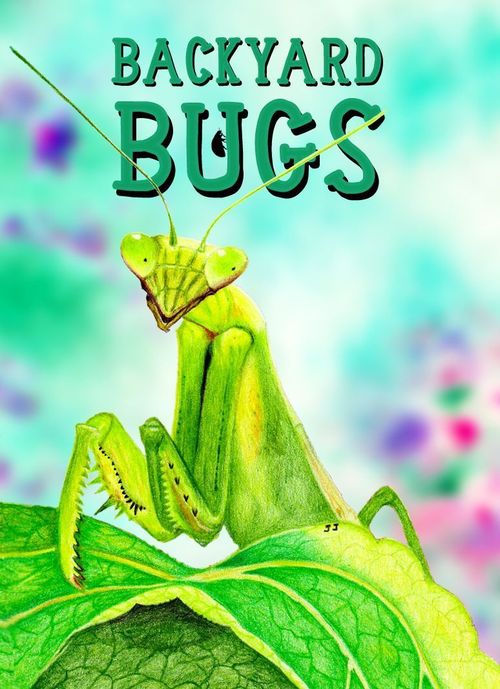
Backyard Bugs
Backyard Bugs Rulebook
Table of Contents
Table of Contents
Contents
52 playing cards:
- 13 red ladybugs
- 13 green katydids
- 13 stinkbugs
- 13 brown cards
Object of the Game
Collect as many LADYBUG and KATYDID cards as possible, while avoiding STINK BUGS and other cards that may reduce your final score.
Preparation
Shuffle all of the playing cards and deal the entire deck, one at a time in a clockwise manner beginning at the player to the left. In a four player game, the cards will distribute evenly, however, in a three or five player game, some players will have an extra card. Players should always keep their cards hidden from other players during game play. After all cards have been dealt, each player must choose two cards to pass to the opponent on their left. A player may not pick up the cards that have been passed to them until after they have selected their cards to pass.
Game Play
Each turn starts with one player playing a single card from their hand, also called leading. The player with the FLEA BEETLE starts the game and leads by playing that card. Moving clockwise, the other players MUST play a card that matches the same color if they can. If they can't, they may play a card from another color. After all players have played one card, the person who played the highest rank of the color that was led will collect the cards and lead the next turn with any card they choose. Collected cards are set aside and not returned to a players hand, this is referred to as a players "collection". Once all cards have been played the scoring round begins. Note: in a 3 or 5 player game, some players will be left with an extra card. In this case the player will place the extra card in their collection at the end of game play. Some players may have no cards in their collection and will skip the scoring round.
The Cards
The cards are classified by color and rank. These two attributes will determine how a card is played during a game. The CATERPILLAR card has a color of brown and a rank of 2. The cards are colored and ranked as follows:
- Red LADYBUG cards: 1–13
- Green KATYDID cards: 1–13
- Black STINK BUG cards: 1–13
- Brown cards: 1–13
Brown cards are all unique and have attributes that affect either game play or the scoring round. Read "Brown Card Rules" for complete details of each card.
Card diagram labels: NAME, RANK, COLOR, ATTRIBUTE.
Card Symbols
- Green arrow symbol: This represents a card that can never be placed in your collection. If one of these types of cards is in the pile you're collecting, it becomes active and stays face up in front of you and from this point on will affect game play only. If any of these cards remain at the end of game play, before scoring begins, remove them.
- Green plus magnifying glass symbol: This represents a card that can give you points during the scoring round. However, they must survive the damage phase of scoring.
- Red minus magnifying glass symbol: This card represents a damage card and may or may not affect your final score. These cards are assessed first during the damage phase of the scoring round.
Example
Player 1 begins the game by playing the FLEA BEETLE. Continuing clockwise player 2 plays the PILL BUG, player 3 plays the EARWIG and player 4 plays the BUTTERFLY. The BUTTERFLY has the highest rank in the color that was led, so player 4 collects the cards.
Cards shown: FLEA BEETLE (rank 1, Player 1); PILL BUG (rank 3, Player 2); EARWIG (rank 4, Player 3; attribute: any KATYDID points are reduced to 3); BUTTERFLY (rank 12, Player 4; attribute: collect this and CATERPILLAR for 8 points).
Player 4 must now begin the next turn and starts with the LADYBUG with a rank of 10. Player 1 follows with a LADYBUG ranked 4. Player 2 plays a LADYBUG with a rank of 8. Player 3 does not have any red cards and can now play any card they wish and decides to play a STINK BUG with a rank of 13. The STINK BUG has the highest rank, however, it is not in the color that was led. Therefore, Player 4 will collect the cards on this turn and lead again.
Cards shown: LADYBUG rank 10 (Player 4); LADYBUG rank 4 (Player 1); LADYBUG rank 8 (Player 2), each with the attribute "Each Ladybug is worth 2 points."; STINK BUG rank 13 (Player 3; attribute: remove one LADYBUG from your collection).
Scoring
When all cards have been played and collected, the scoring round begins. Each player should sort their collection by card type. The scoring round takes place in two phases: damage, followed by points.
Damage
Before points are added, players must resolve the damage that certain bugs will do to their collection. The order in which this happens is important, certain bugs must eat before others. The player in possession of the MANTIS must assess the damage done by that card first. Next, the player with the SPIDER will assess damage, followed by the CENTIPEDE. After these three cards have been removed, along with their meals, the player with the LOCUST can make a trade (see "Brown Card Rules" for details on these four cards). Note: some or all of these cards may have been removed during game play by the GIANT TOAD. Finally, each player removes one LADYBUG for every STINK BUG in their collection. If you have more STINK BUGS than LADYBUGS, then you lose all LADYBUG cards and may discard the remaining STINK BUGS.
Points
After the damage has been assessed and cards removed, count up your final score. LADYBUG cards give 2 points each and KATYDID cards give 1 point for each pair, so 7 KATYDID cards gives 3 points. EXCEPTION: KATYDID cards are worth 1 point each if you possess no LADYBUG cards. Next, count up any bonuses you may have received with the CATERPILLAR. If any player managed not to collect cards, then they receive no points. Also, it is not possible to have negative points.
Brown Card Rules
FLEA BEETLE (1): After the cards have been dealt, the player with this card must start the game.
CATERPILLAR (2): During the scoring round, if you possess this AND the BUTTERFLY you receive an 8 point bonus. If you possess this AND the MOTH you will receive a 5 point bonus. If you possess all three cards you do not get both bonuses. These cards must still be in your collection AFTER all damage has been determined in the beginning of the scoring round.
PILL BUG (3): If you possess this, then a player may not trade with you using the LOCUST.
EARWIG (4): If this is in your collection after damage has been determined, then your LADYBUG cards are worth only 1 point. Definitely not a card you want to collect.
SLUG (5): Another bad card to collect. Avoid this at all costs. If you are unable to remove this with the MANTIS, SPIDER or CENTIPEDE, then it will double your STINK BUG damage. If you collected 3 STINK BUGS, then you will lose 6 LADYBUG cards.
MOTH (6): See CATERPILLAR.
DRAGONFLY (7): This is one of two cards that can't be collected. Instead, it affects game play. If you receive this during game play, leave it in front of you. There may be a time during the game when you do not want to lead. You may use this card to pass the lead to the player to your left. You can only use this at a time when you have the lead and you may only use it once. After using it, remove it from the game. If this card is still in play when the game ends then remove it before scoring, do not collect it.
LOCUST (8): This card has a significant impact during the scoring round. The player who possesses this card may use it to trade ANY card in their collection (except the LOCUST itself) for ANY one of another players cards. You must remove the LOCUST from your collection when the trade is made. You may not trade with a player that possesses the PILL BUG. This trade must be made right before the STINK BUGS do their damage.
GIANT TOAD (9): This card can't be collected. If you receive this card during game play, leave it in front of you for the remainder of the game. From this point forward you MUST feed the GIANT TOAD one card from cards you collect. As you collect the pile, choose one to eliminate and remove it from the game. Place the remainder in your collection. No bug is immune to the toad, even the DRAGONFLY can be eaten. Nothing can remove the GIANT TOAD from play once it has been played. This card can be a blessing or a curse; depending on which cards you're collecting. Remove this card before the scoring round begins.
CENTIPEDE (10): Generally, you do not ever want this card to end up in your collection. It can be beneficial or devastating. During the scoring round this will do significant damage to your collection. After the MANTIS and SPIDER have done their damage, this card will eliminate ANY 7 cards from your collection.
SPIDER (11): Another damaging card to have which may or may not be helpful. After the MANTIS deals it's damage, then this will eat ANY 2 cards from your collection. Because of its higher rank, it can be used to eliminate the CENTIPEDE.
BUTTERFLY (12): See CATERPILLAR.
MANTIS (13): The MANTIS will go first and eliminate ANY 3 cards from your collection. It has the highest rank and can, if you wish, eliminate the SPIDER, CENTIPEDE or any other nasty card that you may have collected. If the MANTIS is used to eliminate other damaging cards, then those cards are removed and will not cause any damage.
Cards that deal damage are also removed after you choose their targets.